 By
By
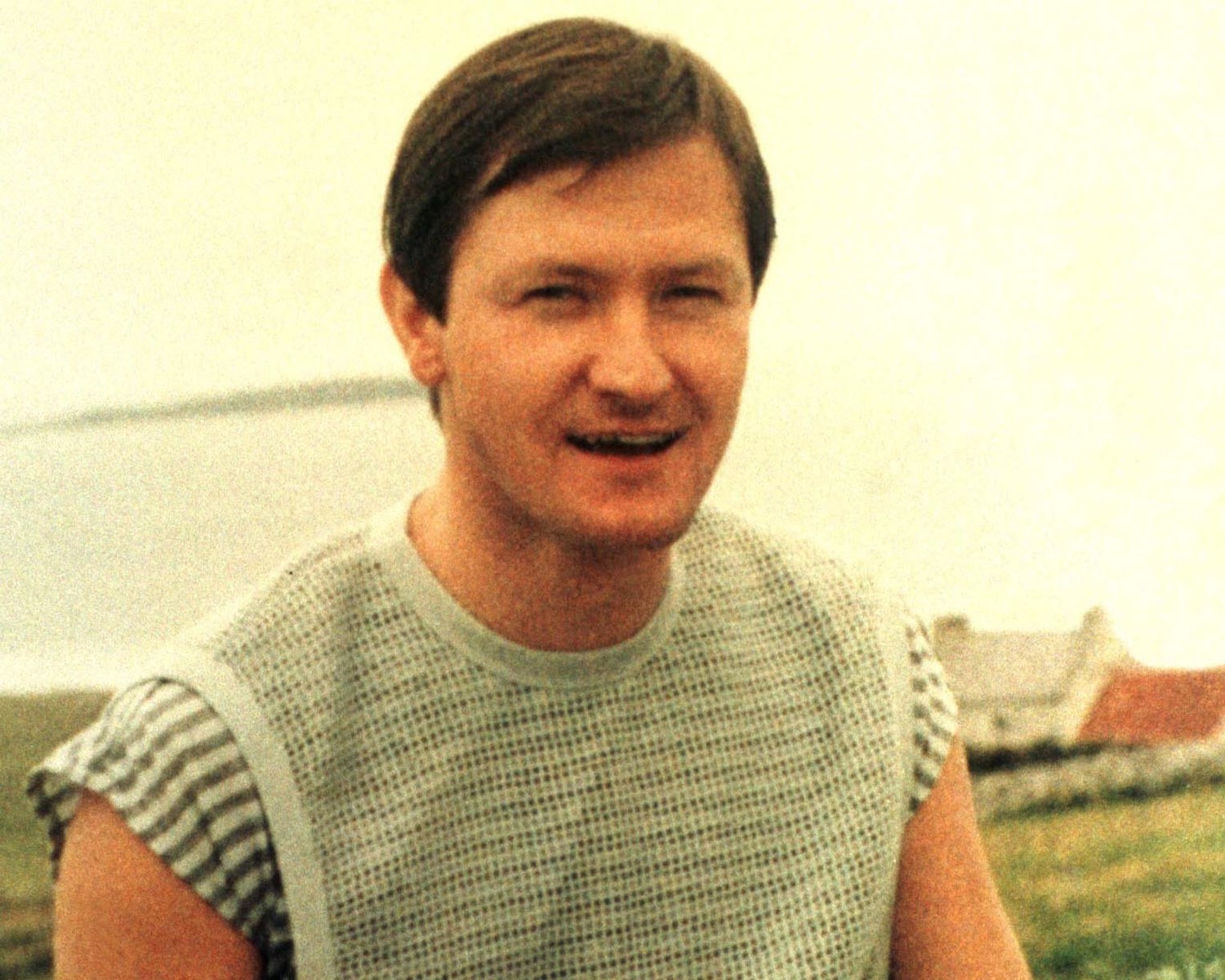
The Secretary of State for Northern Ireland, Hilary Benn, has now published the terms of reference for the forthcoming public inquiry into the 1989 murder of Belfast solicitor Pat Finucane.
While the remit appears to grant stronger powers than previous investigations, the terms may still limit scrutiny of a central question: whether the British state operated a wider policy of collusion during the Troubles.
The 39-year-old solicitor was shot dead in his home in Belfast on 12 February 1989 by the Ulster Defence Association (UDA).
The political context surrounding the murder has long raised questions.
Shortly before Mr Finucane’s killing, remarks made by Tory government minister Douglas Hogg drew controversy.
On 17 January 1989, less than a month before Finucane was murdered, Mr Hogg told the House of Commons:
“I have to state as a fact, but with great regret, that there are in Northern Ireland a number of solicitors who are unduly sympathetic to the cause of the IRA.”
The comments were immediately condemned by the SDLP MP Seamus Mallon, who said that "it would be on the Minister's head, and on the heads of the government, if an assassin's bullet did what his words had done."
Previous investigations
Over the past three decades, several official investigations have examined the circumstances of the killing and the role of state agents.
The new inquiry is expected to rely heavily on evidence gathered during those investigations.
Among them were:
• the Stevens investigations led by John Stevens (1989, 1995 and 2003)
• the review conducted by Canadian judge Peter Cory (2004)
• the 2012 review carried out by Desmond de Silva.
Each of these inquiries identified evidence of collusion between loyalist paramilitaries and members of the security forces, but they were criticised for limitations on the questioning and cross-examination of witnesses.
In February 2019, the Supreme Court of the United Kingdom ruled those previous investigations had failed to establish the full facts of the solicitor’s murder or satisfy the requirements of Article 2 of the European Convention on Human Rights, which obliges the state to conduct an effective investigation into deaths involving state agents.
Under UK law the government sets the terms of reference for public inquiries, defining what can be investigated and how evidence is heard.
Government ministers control key procedural elements including the appointment of inquiry chairs and panel members, access to documents and the publication of reports.
In extreme circumstances a minister can amend the terms or even terminate an inquiry entirely.
Narrowly drafted terms can prevent investigations from examining broader institutional responsibility for serious wrongdoing.
Several inquiries related to the Troubles have faced criticism of being severely limited in who and what they have been allowed to investigate. These include inquiries into:
• the 1972 Bloody Sunday killings, examined by the Widgery Tribunal
• allegations of abuse linked to Kincora Boys’ Home
• the Stalker/Sampson “shoot-to-kill” investigations of the 1980s.
In some cases, inquiries described themselves primarily as “fact-finding exercises”, which prevented them from making legal or moral judgments which may have criticised state agencies such as MI5.

Geraldine Finucane at a press conference in 2020, standing beside an image of her husband Pat. Photo by Kelvin Boyes, Press Eye
The new inquiry will be chaired by Sir Gary Hickinbottom. According to the government, it will examine the “broad circumstances” of Mr Finucane’s murder and provide a public account of any state involvement.
Previous investigations have already identified several UDA members connected to the killing who were also state agents, Brian Nelson, Ken Barrett, and Billy Stobie.
However, focusing solely on individual paramilitary members, two of whom are now dead, risks ignoring whether intelligence agencies or government ministers facilitated or encouraged collusion and murder.
One of the central concerns is whether or not the Finucane Inquiry will be allowed to examine possible government ministerial knowledge or approval of intelligence operations involving paramilitary groups.
The De Silva review reported that government officials meeting senior RUC officers often operated a “don’t ask, don’t tell” approach to the activities of Special Branch agents, under which intelligence officials were discouraged from questioning whether certain activities informers were allowed to engage in were lawful.
For decades, the Finucane family have argued that their priority was not to identify those who carried out the attack, but to establish whether state authorities authorised or created the circumstances that allowed it to happen.
They say the key question remains whether the inquiry will examine the actions of policymakers and senior officials, rather than focusing solely on operational actors.
If the new inquiry does not examine decision-making at senior government level, it will struggle to answer the question of whether collusion was the work of rogue agents, or the product of policy.