 By
By
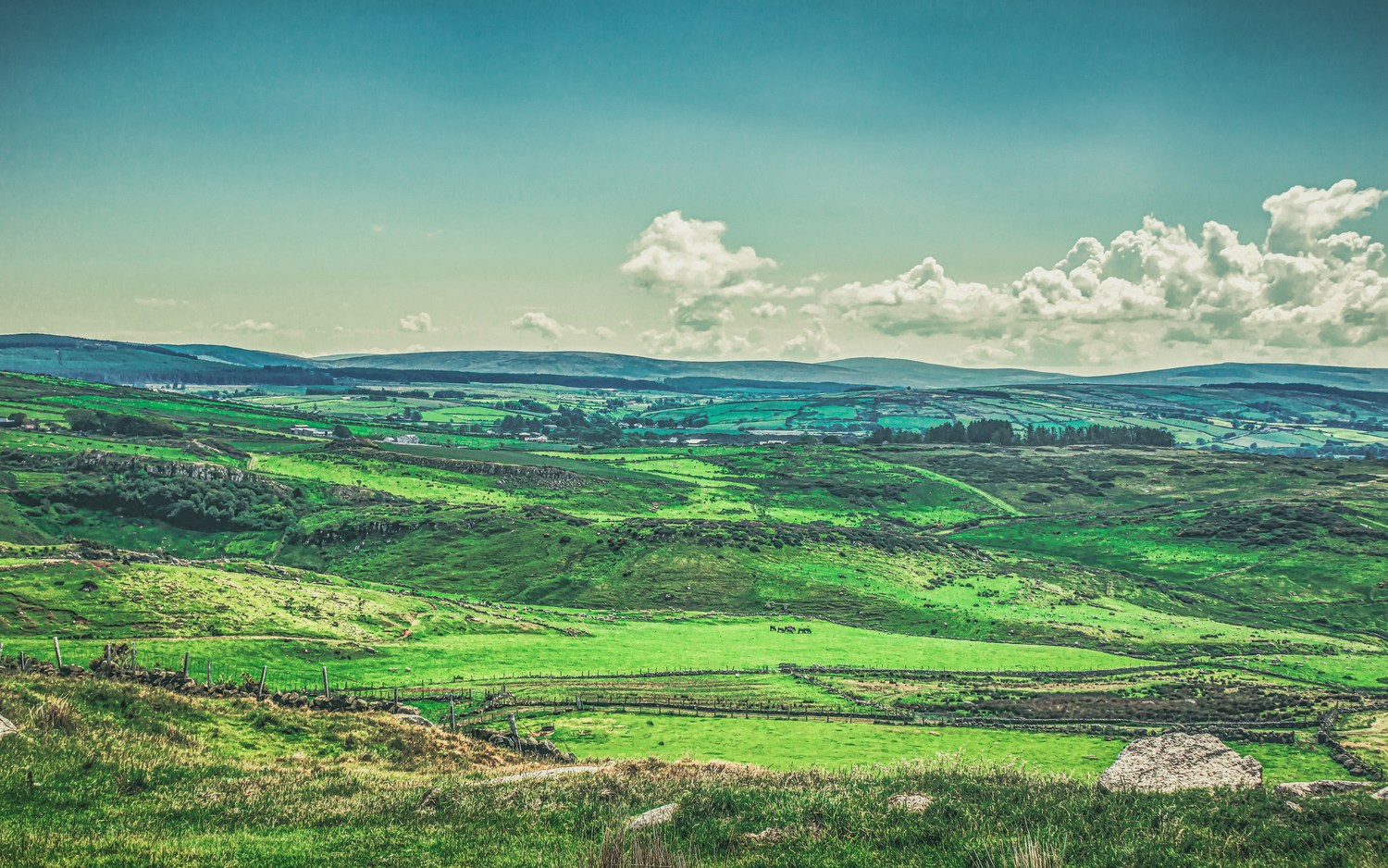
The Sperrin Mountains. Photo by K. Mitch Hodge on Unsplash
Proposals for a Northern Ireland gold mine “shouldn’t proceed” because there is no “particular need” for it, a council barrister has told a public inquiry.
Questions on Monday focused on the economic viability of Dalradian Gold’s planning application, as well as reports not seen by the Planning Appeals Commission (PAC).
The US-backed company applied in 2017 to mine gold, silver and other precious metals from the Sperrin Mountains designated Area of Outstanding Natural Beauty.
After receiving 50,000 objections to the project, the PAC was asked to hold a public inquiry and report to the Department for Infrastructure (DfI) ahead of a final decision.
Following two false starts in 2024 and 2025, the inquiry is now in its second full week at the Strule Arts Centre in Omagh. It emerged that an additional 30 days may be required to address all of the Commission’s questions.
On Monday, Commissioner Jacqueline McParland revealed that “arguably there is a conflict of interest on evidence before this inquiry” in relation to a company that worked for both Dalradian and DfI.
It was outlined last week that environmental consulting firm Golder Associates, which is now part of global engineering and consultancy company WSP, reviewed Dalradian’s mine waste management plan for the department ahead of the public inquiry.
The firm also worked for Dalradian between 2011-2017 on various projects including tailings tests, audits and professional services relating to a waste license exemption.
Commissioner McParland did not accept further third-party submissions on other examples of alleged conflicts of interest, as she said they had not made submissions to the inquiry.
Proceedings then moved to Commissioner Cathy McKeary’s approximately 150 socio-economic questions, beginning with the expected lifespan of the mine.
She cited differing figures in Dalradian’s submissions, ranging from 20 to 25 years, and asked why these varied across reports.
Economist Andrew Hunt, speaking for Dalradian, said the project would involve “two years of construction and 23 years of operation” to extract an estimated 3.5 million ounces of gold.
However, third-party objector and Save Our Sperrins member Fidelma O’Kane said she “understood it would be restricted by the waste dump [known as dry stacks] and it could be filled in 15 years”.
Commissioner McKeary asked how this would align with a projected 20–25 year mine life.
Mr Hunt replied: “Based on the mine plan, it will take between 20 and 25 years of operation”.
He added that it would be hard to say whether they were “going to meet 12.5 tonnes or 15 tonnes [of ore] every day”, but those are the figures which their projections are based on.
Also speaking for Dalradian, SRK Consulting project manager John Merry, whose company produced a 2018 technical study of the mine, later added they “are expecting a limitation on the mine as a result of the dry stack”.
He said that “when 8.7 million tonnes have been mined, including 3.5m ounces of gold, and the dry stack is full, that will limit the mine”.
Dalradian was also asked how long it would take to restore the site, as the commissioner had seen periods of both “six months and five years” in their reports.
The inquiry was told there would be “one year of active closure and 15 years of monitoring”. It was suggested later that dry stacks never become stable, and this one could end up costing the taxpayer in years to come, to which the commissioner said she had further questions on this.
“Gold mine shouldn’t proceed”
The economic case for the mine was another point of contention.
Fermanagh and Omagh District Council’s legal representative, Conor Fegan, said analysis of World Gold Council supply and demand data for 2025 shows there is no need for the project.
He added: “Council’s case is that this particular gold mine shouldn’t proceed.
“The council’s position, from the available evidence that it has seen, is that there isn’t a particular need for this gold mine as set out in the supply and demand of the World Gold Council statistics.”
The comments followed Dalradian advisor Edward Bickham’s assertion that “each strand of gold demand has its own economic drivers”.
He argued that gold is valuable “because of sources of demand”, including gold stores in vaults and jewellery, the latter of which accounts for around a third of current gold use.
Mr Bickham suggested that to put a moratorium on gold mining would “create a situation of the haves and have nots” that would constrain supply and disadvantage those without gold stores.
Third-party objector, Dr V'cenza Cirefice, told the inquiry “gold is not a critical mineral strategically or generally” and that uses like “jewellery and wealth creation… don’t outweigh the social and ecological costs this project brings”.
Dr Brian Garvey from the University of Strathclyde added that there is “no strategy for gold mining in the UK or Northern Ireland”. He described Dalradian’s recent suggestion it is also seeking tellurium - which is classified as a UK critical mineral because of its role in solar technology - as “misleading”.
Dalradian said 99% of the mine’s value would come from gold. Professor Amy Stryker, of University College Dublin (UCD), questioned claims that the project would support the renewable transition through other minerals.
She also said suggestions the gold extracted could be used to “underpin wealth in vaults” were “quite insulting for the local people to consider”.
The “applicant admits there will be adverse effects - it’s just whether they are acceptable”, she added.
The Commission was also asked to consider whether the inclusion of tellurium represents a change to the original application for gold, silver and copper, thus potentially requiring a new planning application and environmental assessment.
Objector Pat Haughery said: "Tellurium has never been mentioned until November 2024.
“The need for this mine is determined by the applicant's desire for profit.
“Why go into an Area of Outstanding Natural Beauty when it can be extracted elsewhere - the price we have to pay is too much.”
Responding to third-party comments, Mr Bickham said: “The fact is we are in a global economy and gold is one of the sources of stability in an environment that is increasingly unstable.
“The fact it sits in vaults in banks does not suggest it is part of a global capitalist conspiracy - it is part of the institutions that make up the world economy.”
He added that “the silver, copper and tellurium would not be accessible other than through gold mining” and that it “is a gateway to liberating those minerals”.
“There wouldn’t be enough economic value to mine those minerals if it was not for co-located gold.”
Speaking for FODC, Conor Fegan said: “The Commission really ought to satisfy itself as to the robustness of some of the claims by the appellant on this point.
“Two things can be true - that gold is important - but there is no need to mine any more of it.”
"Obsolete"
Concerns were also raised about gaps in the information supporting Dalradian’s application, described by UCD’s Dr Stryker as “a big red flag”.
Following a complaint to the Commission on Friday, she again outlined her concerns about the lack of a Habitats Regulations Assessment, which considers the mine's impact on protected habitats in the area.
“We are still lacking basic information. NIEA have submitted a peatland archaeology report and pearl mussel report. You would assume appropriate assessment is more important,” she said.
“I don’t think it's sufficient to say they can be carried out afterwards. It's contrary to common sense, fairness and meaningful participation.”
The inquiry also heard that a 2016 feasibility study referenced in the application had been superseded by a 2018 technical report produced for Dalradian shareholders.
In response to questions from third-party objectors, the Commission said it had not received either report, nor an independent economic review by Ernst and Young.
Objectors also highlighted how the 2016 report was still referenced in the planning application despite the later report “superseding” it.
Third-party objector, Pat Haughey, said: “Every figure they produced in terms of feasibility is based on this [2016] report.”
Speaking on behalf of third-party objectors, Dr Garvey said Dalradian is “relying on what they are now saying is discredited or obsolete” as a result.
He argued that the “economic data being used is very outdated” and outlined how there is a “discrepancy” between the two reports.
He said: “It went from 5 grams per tonne to 3 grams per tonne [of ore extracted].”
Dalradian’s counsel, Stewart Beattie KC, said changes were reflected in the 2018 document and that he didn’t think he needed to go any further than that.
The Commission also examined comparisons with Tara Mines in County Meath, frequently cited by Dalradian, after third-parties said there was “no economic bonanza” there.
Mr Hunt said they were judging the Dalradian scheme on “its own merits” and that there was “no requirement to do full studies”.
Fermanagh and Omagh District Council’s Mr Burge highlighted how “mines tend to rely on itinerant workers” and that the “number of jobs that can be accessed by local workers” can be “overstated”.
He also highlighted the limited capacity of local supply chains to support specialised operations.
Co Meath woman Mairead Heaney, who lives beside Tara Mines near Navan, travelled to Omagh to share her experiences of that mine with the inquiry.
Speaking about the economic benefits, or lack thereof, she said: “They found no adverse effects on the local economy during the closure of Tara mine last year except for workers and security.”
She added: “The effects of wellbeing on local residents is a concern.
“Forty families plus moved out of the community, either being bought up or being unable to sustain living in the area.
“When this sort of development comes into a rural area, it has this sort of impact.”
She also spoke to the volume of “often 30 trucks per hour passing along small country roads” and the noise and air pollution that brings.
“This is what we are dealing with,” she said.
“I cannot say anything about an economic benefit.”
The inquiry continues on Tuesday, when commissioners will consider whether it has to be extended to almost 50 days to consider all of the questions posed.
Shauna Corr is an investigative reporter