 By
By
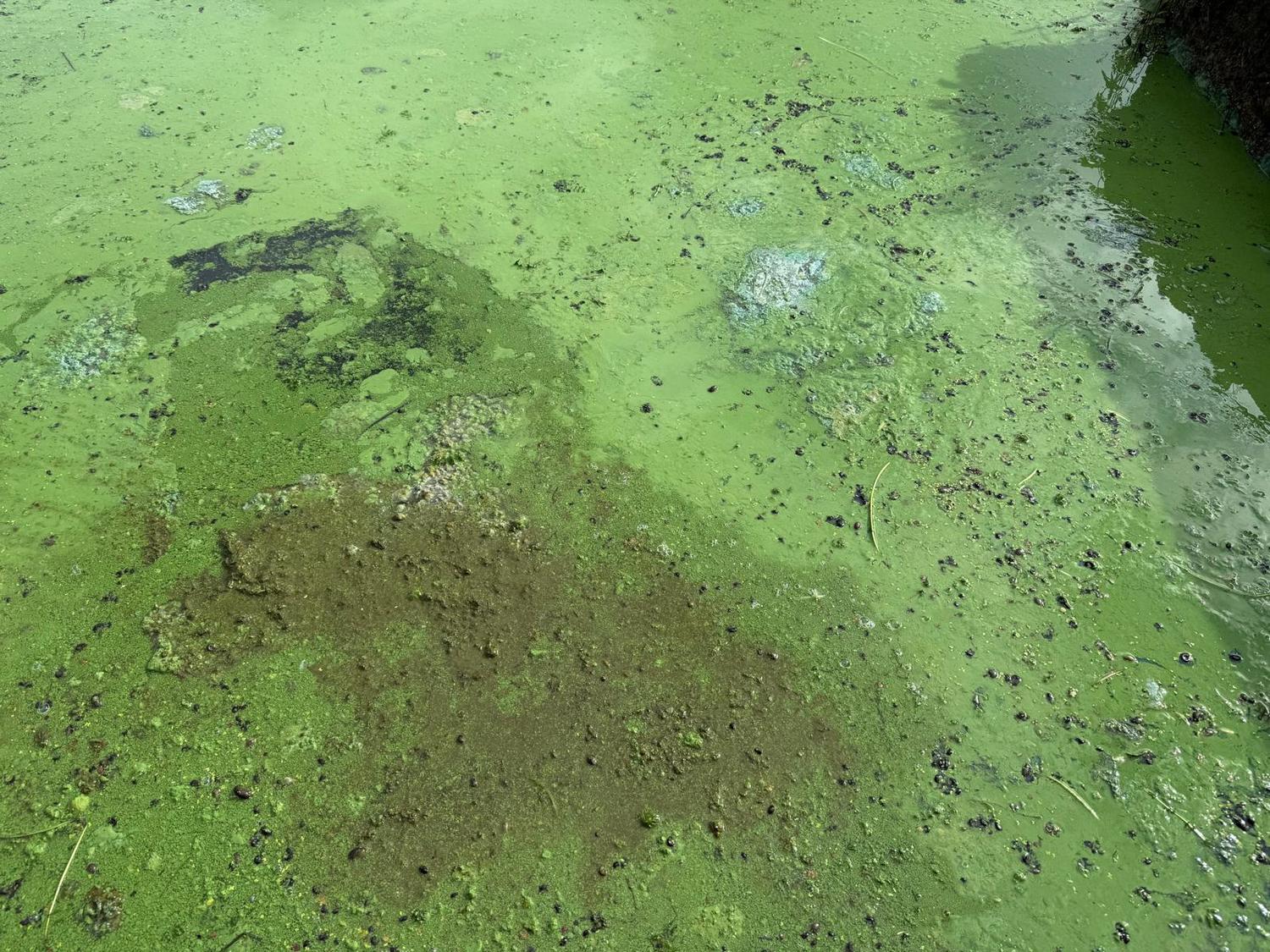
Severe blue-green algae blooms in Lough Neagh. Photo by Tommy Greene, The Detail
British investors have presented ‘advanced’ plans for Lough Neagh’s future to local stakeholders, The Detail can reveal.
Documents seen by The Detail show proposals that would reshape ownership and management of parts of Ireland’s largest inland waterbody, even as calls grow for it to be taken into public ownership following unprecedented algal blooms.
Proposals include putting wind turbines in the middle of the lough and transferring ownership of hundreds of acres of land.
Controversial green finance instruments, including carbon credits, also form part of plans currently on the table.
The lake’s bed and banks are currently owned by Nicholas Ashley-Cooper, the 12th Earl of Shaftesbury. His Estate’s ownership dates back to Arthur Chichester’s seizure of the lough during the 17th century Plantation of Ulster, with the vast waterbody having transferred to Shaftesbury’s family through marriage in the 19th century.
The Estate’s territorial claim at Lough Neagh has long been contested by various actors and groups around the vast waterbody. But, while there are renewed calls to take it out of private ownership, there is a lack of consensus over how to go about this and what to do next.
Lough Neagh provides half of Belfast’s drinking water and more than 40% of Northern Ireland’s overall supply.
New proposals
The Detail has seen correspondence and documents where discussions on proposals over the lough’s future have taken place.
Detailed plans to set up a ‘Common Lough Neagh’ company were discussed at a meeting of lough stakeholder groups at Queen’s University Belfast last October.
The proposals are being advanced by entrepreneur Christoph Warrack, CEO of a nature consultancy group Common, described as “a UK social enterprise enabling communities to buy and manage land for nature recovery, for health and wellbeing, and for local economic development.”
At the meeting, Mr Warrack presented plans for the proposed ‘Common Lough Neagh’ company, described as a “bioregional structure”.
The plans stated that the environmental issues at Lough Neagh “requires immediate action by the public, private and third sectors working collaboratively to deliver a range of different innovative solutions to this complex challenge.”
A 20-page briefing document which Mr Warrack circulated at the meeting set out plans for potential “Revenue-Generating Activities”, including wind farms on the Lough or small-scale anaerobic digestion facilities for processing farm slurries.
It also mentions carbon credits, controversial permits which allow companies to ‘off-set’ their pollution by investing in nature restoration elsewhere.
Meeting attendees say Mr Warrack suggested such proposals could bring £1 billion of investment to Lough Neagh, although he did not confirm this when asked by The Detail. The briefing document itself only mentions revenue projections of “£500k+” after four or five years.
Plans which involve transferring ownership of a “pilot” area within the lough catchment of around 500 hectares were also discussed at the October meeting. It is not clear whether this transfer would involve land currently owned by the Shaftesbury Estate or the number of other smaller landowners within the lough catchment. A potential area around the Ballinderry River is mentioned, but an exact location was not specified in the document.
While the plans emphasise the need to “put environmental and social needs before profit (so) future generations can prosper”, some attendees raised concerns.
James Orr, director of Friends of the Earth NI and a member of the Lough Neagh Development Trust (LNDT), described some of the proposals under consideration as attempts to ‘monetise’ and extract further value from the lough.
Mr Orr added that many living near or relying on the lough are completely unaware of these plans, which he believes are at best “a dangerous distraction” and at worst an attempt to exploit the ongoing crisis at Ireland’s largest inland waterbody.
“A conversation is opening about the Lough having new rights,” he said.
“These 'rights of nature' include the right to flourish, the right to regenerate and the fundamental right to exist.
“At the same time, and if you listen hard enough, there is another conversation. Consultants, researchers and landowners are examining the prospects of the 'Lough paying for itself'.
“In this distinct economic paradigm, the Lough is only allowed to recover if so-called solutions can become 'monetised' or 'financialised'. Above all else, the 'solutions' for Lough Neagh have to be investible. That demands a rate of return on the investment, more extractive profit to be taken out of the Lough.”
Other concerns over the plans were raised by members of the LNDT at the October meeting.
The LNDT’s name had allegedly been added to apparent proposal documents as a partner organisation without the group’s prior knowledge or consent.
A consultant-led management initiative called Forever Lough Neagh, which is being coordinated by the National Trust, was also named as a partner organisation for Mr Warrack’s plans in the third line of the briefing document’s executive summary.
A spokesperson for the National Trust, however, told The Detail that references to the Forever Lough Neagh initiative as a “supporting partner” were “inaccurate” and that neither the Trust nor Forever Lough Neagh had been formally approached over a partnership prior to the meeting.
Response
Although meeting attendees described his proposals as being “at an advanced stage”, Mr Warrack told The Detail all partners listed in Common’s paper for the lough were “expressly prospective”.
“The document from which I shared remarks at the meeting was an ‘outline proposal’ for a charitable funder, in attendance at the meeting,” he said. “As such the list of partners was expressly prospective, and set out as such in my remarks.”
Mr Warrack also stated his organisation had no intention of acquiring the lough bed from the Shaftesbury Estate.
He added: “I was there to meet local stakeholders including the LNDT/NIDT, to discuss, further to long-running discussions with other regional stakeholders, how Common’s models of community land asset transfer, governance and nature-positive enterprise development might be of service to the wider catchment restoration initiatives.
“On behalf of Common, I have engaged with NI stakeholders on the Lough Neagh crisis since January 2024, since our work to engage and enfranchise communities in landscape regeneration is respected and valued in these developments. In light of which, I was an invited participant in the two-day Strategic Insights Lab on Lough Neagh at Cafre in March 2025.”
He also said it was “well understood by DAERA as well as in other devolved and local governments that public and philanthropic funding will not be sufficient nor timely enough to reverse the decline of nature.
“This does not mean profiteering,” he added. “It means a shift from a nature-negative economic model to one which is regenerative of nature and community.”
A DAERA spokesperson said the Department "is unaware of the organisation in question and has no involvement with any related proposals for developments at Lough Neagh.”
A representative for the Shaftesbury Estate told The Detail the Earl would not provide comment on the meeting or lough transfer proposals at this stage.