 By
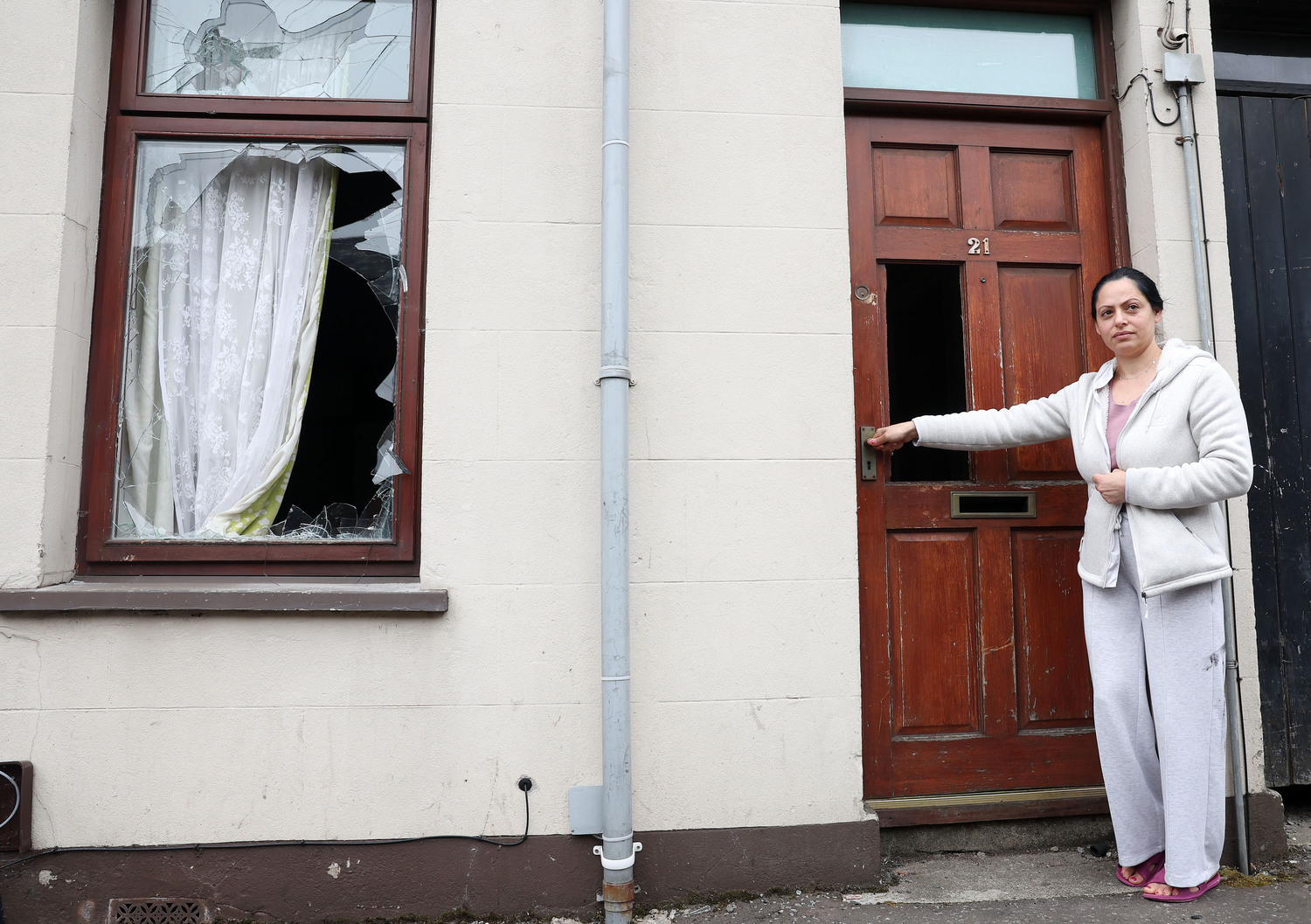
Minka Kolev outside her home, which was attacked and ransacked during the racist violence in Ballymena in July 2025. Photo by Jonathan Porter, Press Eye
An internal Stormont assessment advised that asylum seekers should not be housed in parts of Northern Ireland due to “actual or likely racial tensions”.
Almost half of all areas in Northern Ireland were classified either as ‘Red’ zones unsafe for asylum seeker accommodation, or ‘Amber’ zones where officials had “reservations”.
The documents were obtained by the The Detail through freedom of information requests. The locations of the areas were not disclosed on safety grounds.
Racist hate crime is at an all-time high in Northern Ireland, driven in part by three consecutive summers of organised racist violence and civil unrest.
The PSNI said some loyalist paramilitaries were involved in directing the violence at several locations in Belfast in June, where migrant families were burnt out of their homes.
Patrick Corrigan, Head of Nations and Regions at Amnesty International UK, said it was “appalling” that race hate crime was now so bad that Stormont had concerns about housing asylum seekers in large parts of Northern Ireland.
“This is a shocking indictment of sustained state failure”, he said.
“The authorities must not allow paramilitaries or racist hate mobs to determine who can or cannot live in certain areas. There can be no ‘no-go’ areas in Northern Ireland.”
Mr Corrigan said Stormont needed to direct attention and resources to these areas.
“If the government can identify areas where people may face threats, its responsibility cannot end with colouring a map red or amber. It must also act to tackle the violence and coercive control that make people unsafe, long-term residents and new arrivals alike.”
A spokeswoman for the Executive Office said a multi-agency programme of interventions “to address the root causes of hate” will be rolled out over the coming months.
These will “focus on orientation and support, community engagement and relationship-building, as well as education and early interventions with young people.”
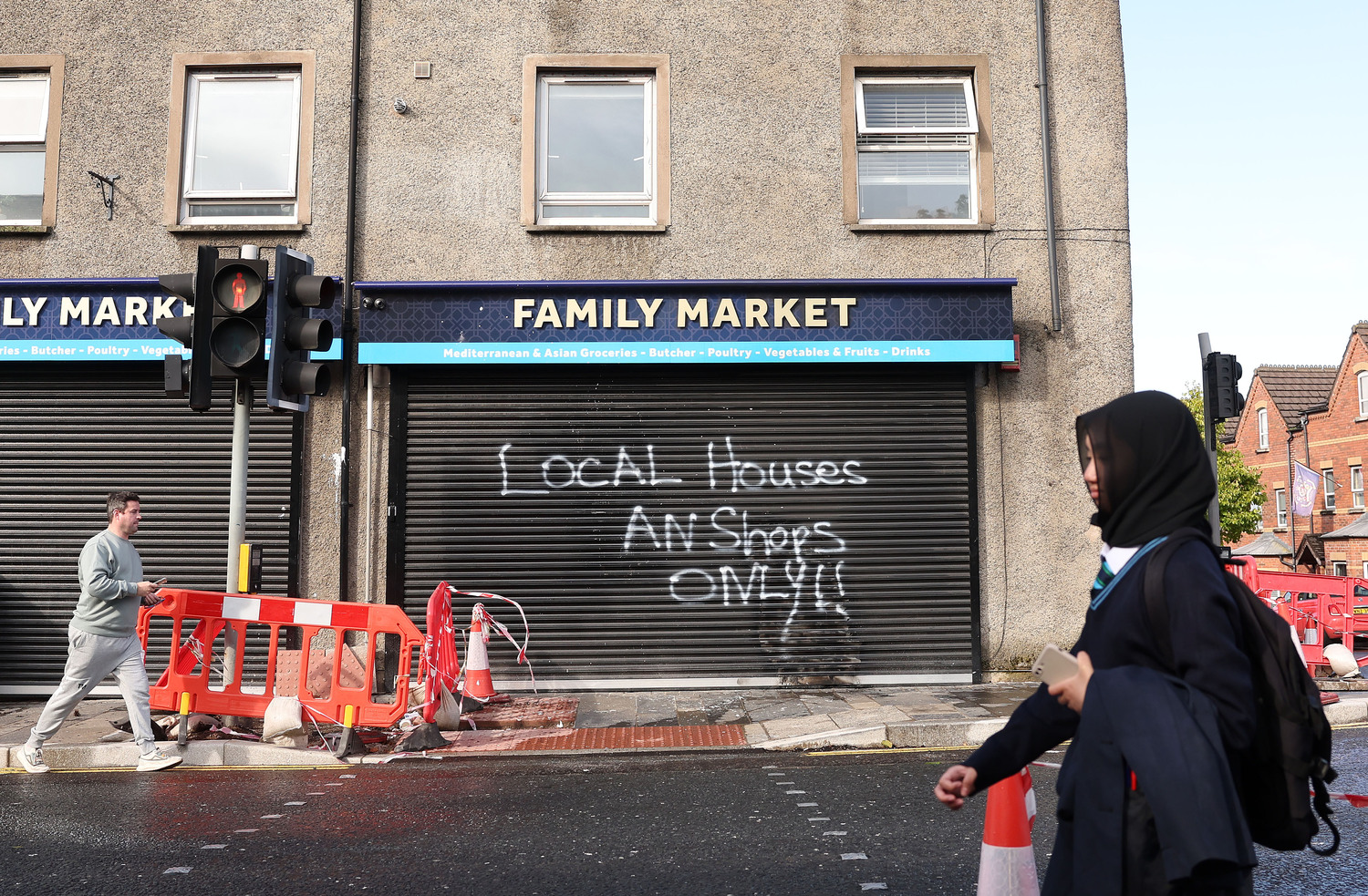
A shop in Belfast which had been set on fire in a racially-motivated attack in September 2023. The shop had been attacked four times in the preceding fortnight. Photo by Jonathan Porter, Press Eye
Accommodation
The so-called “heatmapping” exercise was carried out by the Executive Office for Mears, a private company that works for the Home Office, to inform decisions on asylum accommodation locations across Northern Ireland.
The PSNI and the Housing Executive fed into the analysis.
Each of the 462 electoral wards that make up Northern Ireland’s 11 council areas were classified as Green, Amber, or Red.
The most recent heatmapping exercise took place in August 2025 and made the following assessment:
- A majority of wards in Northern Ireland were labelled ‘Green’ (240 wards, or 52%), meaning they were areas where the authorities had no reservations about Mears procuring accommodation;
- 'Amber' wards (148, or 32% ) were those where authorities had “reservations”. Housing procurement could proceed, but any placements needed to be "closely monitored";
- No accommodation should be procured in “Red” areas (73, or 16%) until the reservations had been addressed, with a review due after three months.
There were 2,270 asylum seekers living in Northern Ireland, as of June 2026. Most (1540, or 68%) live in Belfast.
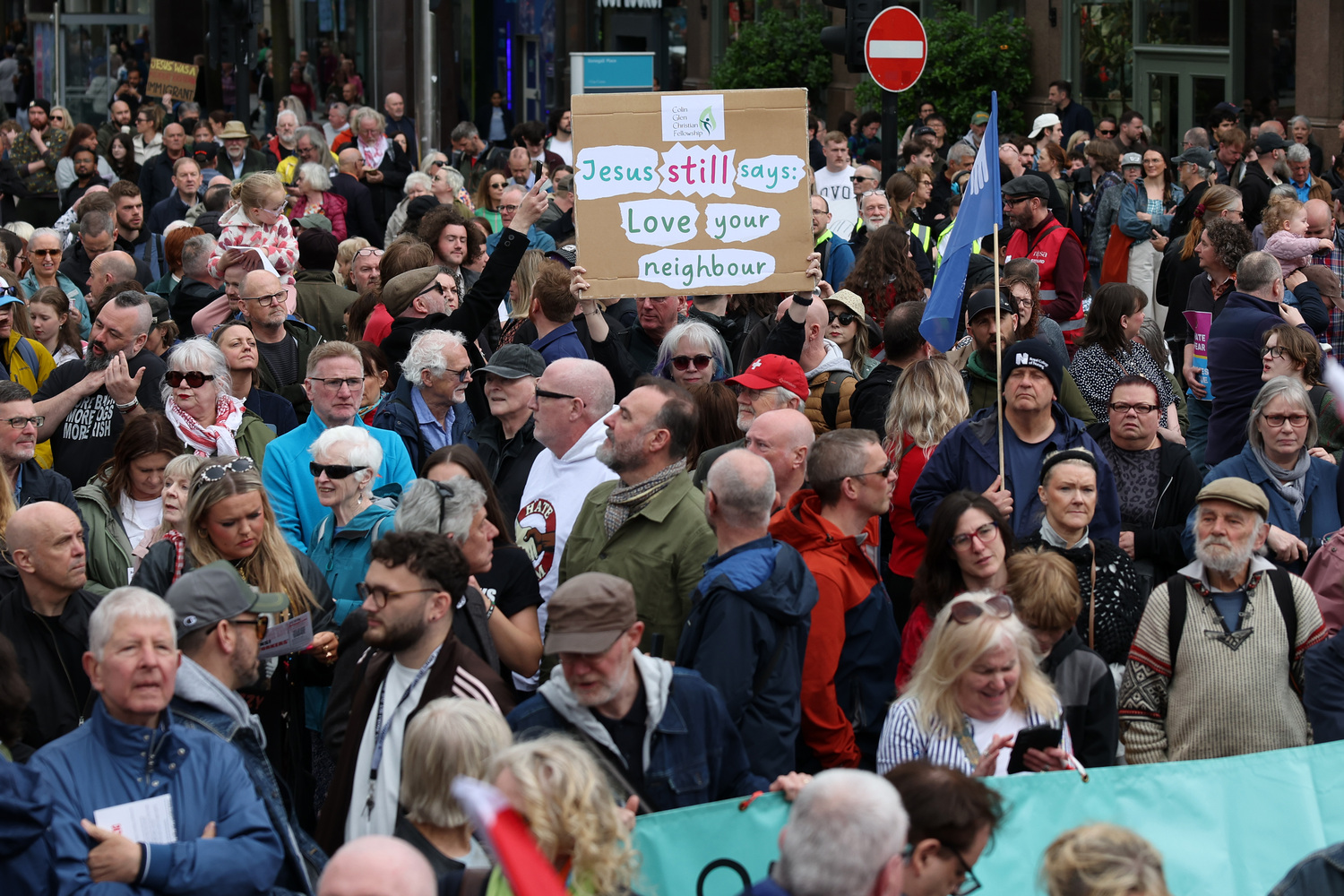
A large anti-racism Belfast in June 2026, following days of racist rioting where people were burnt out of their homes. Photo by Declan Roughan, Press Eye
Heatmapping
Correspondence from the Home Office, dated September 2025 and seen by The Detail, said that heatmapping was used as a guide “to assess the suitability of areas at a ward-based level to accommodate asylum seekers”.
“There are a range of factors considered, such as asylum-related threats, gang-related violence, sectarian tensions, drug-related crime, or other forms of threat.”
The letter also said that the Home Office was working to develop a new model which would “highlight any known risks regarding a specific location or property, rather than categorising entire areas.”
This approach “is used in other nations and regions within the UK”.
It is understood that, more than a year later, this process is still in development.
The Detail asked Mears and the Executive Office if there was any asylum seeker housing in areas labelled Red. Neither responded to the question.
Statistical data relating to previous hate-motivated incidents is part of the ‘heatmapping’ process.
However, one organisation which works with asylum seekers said they knew of families placed by Mears in parts of central Belfast - areas with the highest rates of hate crime in Northern Ireland.
The Participation and Practice of Rights (PPR), which supported people burnt out of their homes during the June 2026 violence, said that it could make sense to house people in central Belfast, which is more ethnically diverse and has greater access to services.
But they also said that there was a public interest in knowing if public money is being spent on accommodation in areas known to be at risk.
The Executive Office said that heatmap ratings were “not solely dependent on an assessment of actual or likely racial tensions and may include other factors such as access to services.”
They also added that the grading of certain areas “is valid at a point in time and is subject to change.”
“Mears is guided by the advice of local partners when procuring property for use as asylum accommodation”, a spokesman said.
A Home Office spokesman said there are “robust policies and procedures are in place to safely accommodate asylum seekers across Northern Ireland.”