 By
By
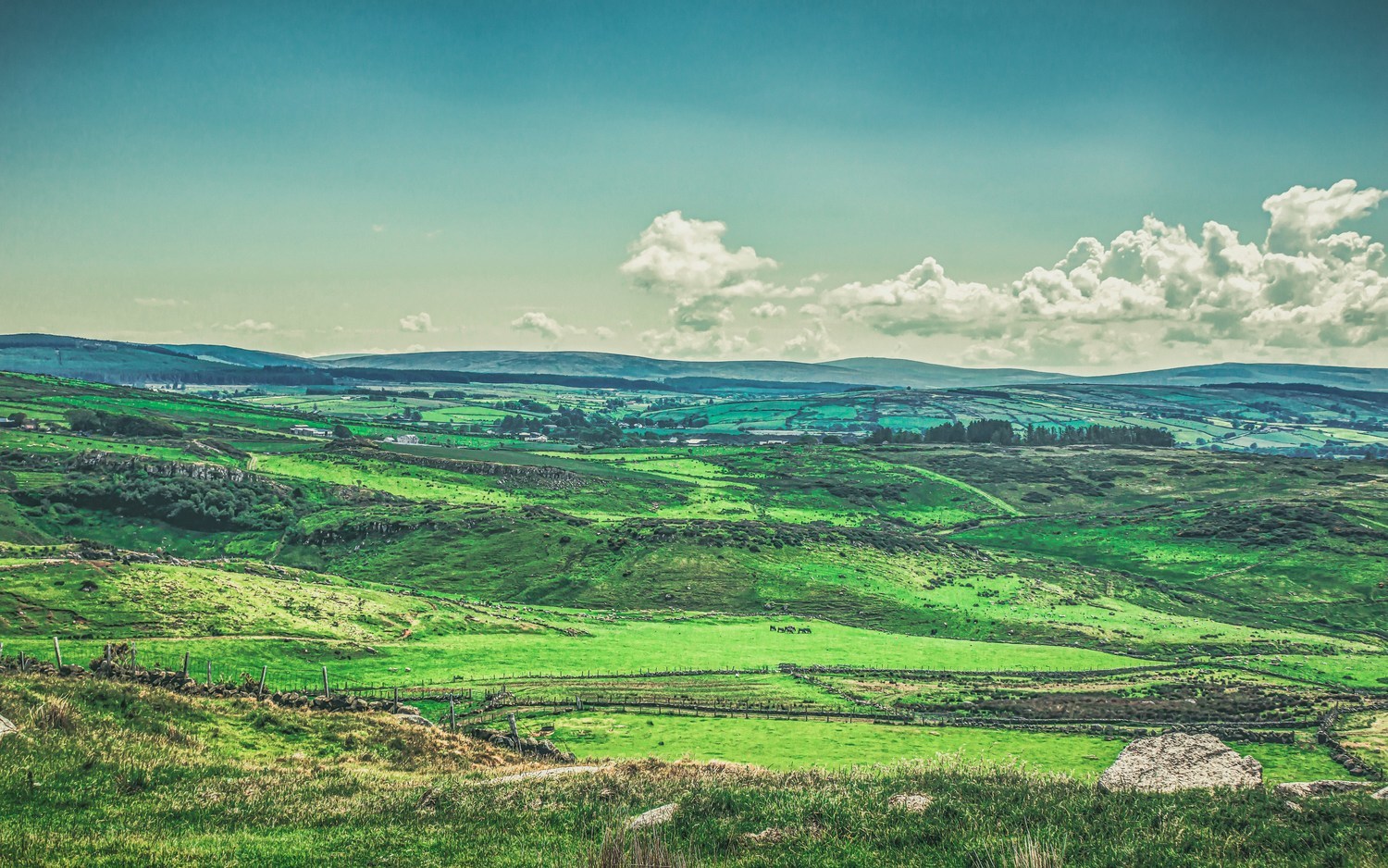
The Sperrin Mountains. Photo by K. Mitch Hodge on Unsplash
There will be "16 explosions a day" at the proposed Dalraidian gold mine in the Sperrins, an inquiry has heard.
Hearings into the planning application continued at the Strule Arts Centre in Omagh over a number of days last week.
Representatives for Dalradian Gold said the 16 “firings” will take place during two time slots each day: in the morning between 7am and 7.30am and another in the evening between 5.30pm and 6pm.
Dalradian’s chief counsel, Stewart Beattie, described the underground explosions as “a series of rock blasts… at multiple locations across the mine”.
Conor Fegan, barrister for Fermanagh and Omagh District Council, which opposes the proposed mine, described the new details as “quite the revelation”.
He told the Planning Appeals Commission (PAC): “A substantial amount of this topic - the detail isn’t really known. That approach is wrong in law.
“You must ensure these matters are properly dealt with upfront and aren’t deferred to post consent.”
Third party objectors also raised a number of concerns about the new details, including the lack of “raw data” on the impact on people, wildlife, the environment, water quality and buildings from blast vibrations, noise and pollution.
The inquiry heard that no specific assessments were done on noise from underground blasting, and that an explosives assessment was not carried out.
Save Our Sperrins’ solicitor, Mary Brolly said: “We are given very little information to independently assess or consider the likely impact of those explosives.”
Mr Fegan told the PAC: “There is some force in the view being expressed that there is a lack of information on this subject. It touches on the question of whether you can make the likely assessment of significant effects.”
Meanwhile, third-party objector Martin Tracey said he believed the Department for Infrastructure (DfI) had “never requested any clarification in terms of transport, safety and licensing” of the explosives from the PSNI.
DfI counsel, David Elvin, told the inquiry the “PSNI is not a statutory consultee under the relevant regulations”.
As discussions around blasting and explosives continued on Wednesday, there was a heated exchange between the PAC and Dalradian after they were asked about concerns that their “explosives store is dangerously close to residential areas of Greencastle”.
Commissioner Cathy McKeary said maps provided by Dalradian provided “no context, no scale, no exclusion zones”.
“We’ve asked the question: ‘Is it there in evidence?’” Commissioner Jacqueline McParland added: “If it’s not, give us an honest answer and tell us if it is there or not.”
Dalradian’s Mr Beattie took exception to the comment, adding: “Give me an honest answer is not a necessary comment.”
Commissioner McParland responded, saying the PAC has been directed to documents that didn’t answer their questions. She added: “Referring to parts of the (documents) that don’t answer the questions asked is delaying the inquiry.”
‘Statutory function’
Electromagnetic Fields (EMF) from power lines, Radon Gas and Naturally Occurring Radioactive Material (NORM), were among the issues discussed on Thursday.
Consideration of radon and NORM falls to a range of bodies including the Public Health Agency (PHA), the Industrial Pollution and Radiochemical Inspectorate (IPRI), and the Health and Safety Executive NI.
IPRI chief inspector, Dr Gillian Wasson, said “Radon is not generally considered an outdoor hazard [and] will quite rapidly disperse in air. We would have no concern about transboundary impacts of radon or NORM.”
The Public Health Agency’s Consultant in Health Protection, Dr David Cromie, said: “Leukaemia cases in Northern Ireland have been steady for the last 30 years in children under 14. Despite the proliferation of power lines, that incidence has not changed.”
Referencing Mid Ulster, he added: “Cases in that area are entirely consistent to rates experienced in Northern Ireland.”
He also said if radon “is released from the mine, it becomes part of the background levels which does not pose a risk to human health”.
A representative for Northern Ireland Electricity (NIE) Networks said the 26km of proposed overhead power lines for the mine were “well within safety margins”.
Third parties highlighted how radon maps show Greencastle as high risk for the gas - which is the second leading cause of lung cancer and estimated to kill around 30 people a year in Northern Ireland. They said the feared underground fractures from mining could increase the risk to their community.
Dr Alan Evans, a retired GP and former out of hours clinical lead for the Southern Trust, told the inquiry he felt radon risk was being underestimated and he wasn’t sure why. He added: “Greencastle is in an area where radon levels in 10-30% of homes are higher than the level at which action is required. It completely contradicts the documentation.”
He raised concerns about studies linking childhood leukaemia to EMF. Reports of a suspected childhood leukaemia cluster in Mid Ulster were also mentioned.
Lynda Sullivan, from Irish National Trust An Taisce, questioned the absence of “a list of all substances and mixtures involved in the mining process” as well as assessment of exposure to “arsenic or lead in the case of tailings failure” or “mixtures of the chemicals, mixed in tailings”.
She asked how health impacts can be assessed in light of this.
Dalradian’s Mr Beattie told the inquiry the “issue of assessment of radon and NORM has demonstrated no engagement with the regulations”.
The inquiry resumes on August 4.
Read all our coverage of the Sperrins public inquiry here.