 By
By
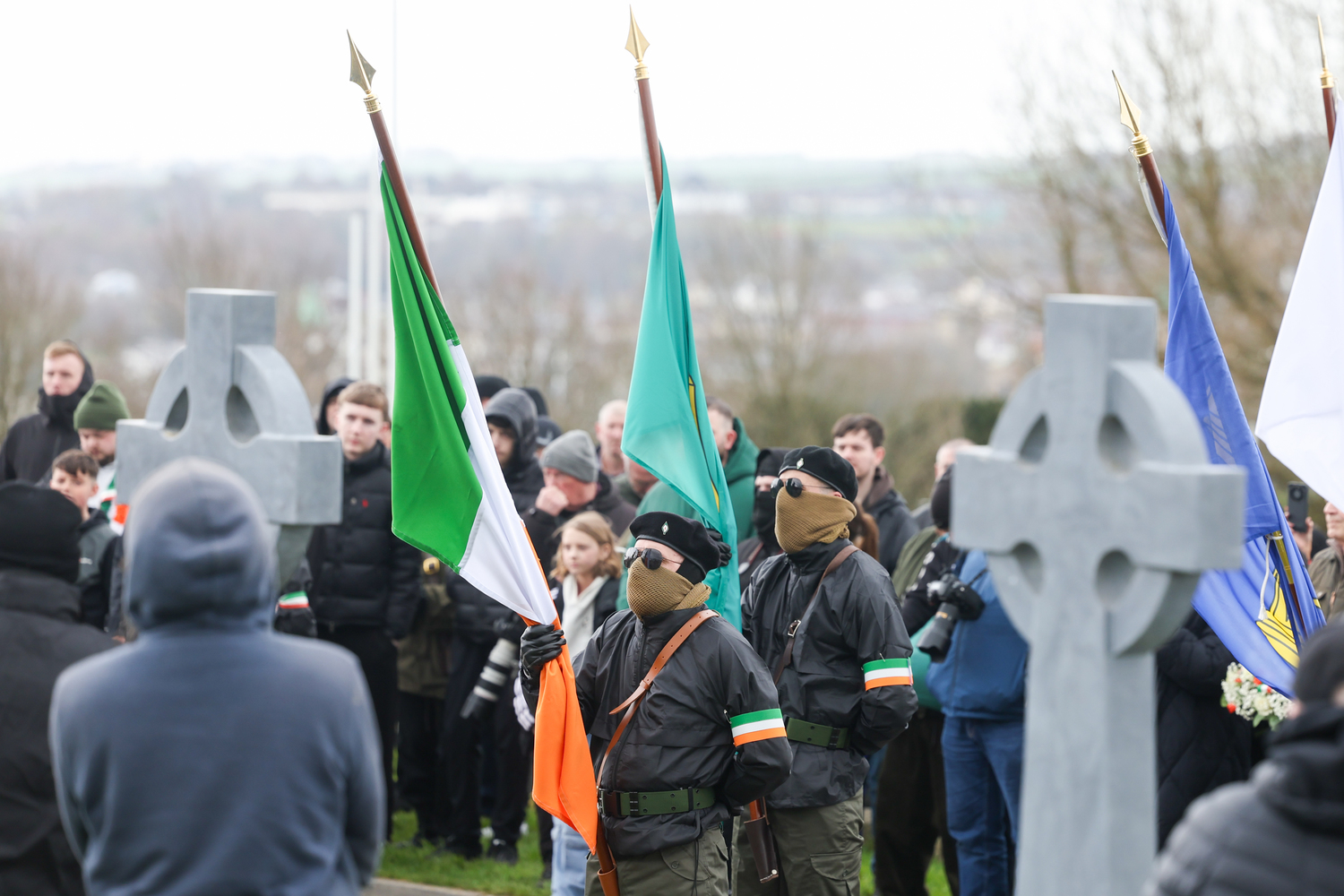
Saoradh republican Easter Parade in Derry City in 20206. Photo by Press Eye
Young children in England were referred to an anti-terror programme over fears they supported dissident republican extremism.
At least sixteen people, including two aged under 10, were flagged for potential radicalisation relating to Northern Ireland terrorism.
The UK government's ‘Prevent’ strategy was introduced in 2005 with the aim to identify and intervene with people at risk of committing terrorist acts.
Over 10,000 referrals were made between October 2024 and September 2025, according to newly published data from the Home Office.
Right-wing (20%) and Islamic (8%) extremism were the most common ideologies of concern. However, in most cases (56%) no ideology was identified.
Schools, police, and other public authorities in Britain are obliged to flag anyone to Prevent who they believe may be susceptible to radicalisation. Most of those referred were young men, with the largest cohort being 11 to 15 year olds.
No guidance
Documents released under freedom of information laws show that there is no government guidance on how to understand ‘Northern Ireland-related’ extremism for a Prevent referral.
Rights & Security International, a London-based NGO which obtained the documents, said that this lack of guidance heightens the risk of unnecessary referrals for people expressing their political views.
In one FOI response, the Home Office said that “we do not hold any policy or guidance documents which explain the meaning of ‘Northern Ireland Related – Dissident Republican Extremism’ or ‘Northern Ireland Related – Unionist/Loyalist Extremism’.”
The Home Office’s Prevent guidance, which discusses the motivations and aims of Islamic and right-wing extremism, contains no explanation or even reference to Northern Ireland-related terrorism.
"The government has decided that Prevent should not apply in Northern Ireland, so it is bizarre that the police are still processing referrals for Northern-Ireland-related extremism,” said Jacob Smith, RSI’s Freedom of Expression and Belief Team Leader.
"All the while, they have not provided potential referrers with any guidance about what speech or conduct is referrable, opening the door for unnecessary and harmful referrals of people simply expressing their views about constitutional issues."
Prevent does not apply to Northern Ireland. In an assembly question last year, the Justice Minister Naomi Long said there were no plans to change that.
Northern Ireland cases
The information released by the Home Office gives detailed information about the 16 people referred for dissident republican extremism.
Seven were aged 25 or under, including two aged under 10. Nine were between 31 and 60 years old. Most were male (14).
Two of the individuals had schizophrenia and another had a psychotic disorder
Six were from the West Midlands, with another five in the North West of England. There were no cases in London or Wales.
Only two of the 16 were referred to the follow-up Channel programme, meaning that the other 14 cases were either closed without further action, or diverted to other services.
There was also at least one case of concern relating to loyalist extremism. However the figures were not released due to the low numbers involved.
Failures
Prevent has been criticised for failing to stop attacks by young men who had been referred to the programme.
This includes Axel Rudakubana who was 17 years old when he stabbed 11 children and two adults, killing three, in Southport in 2024.
He had been referred to Prevent on three occasions between 2019 and 2021due to his interest in terrorist attacks and school shootings, but there was no evidence of a fixed ideology or motivation.
The programme has also faced criticisms of curtailing free speech, and targeting ethnic minorities and those with disabilities.
While less than 2% of the UK population has autism, around 18% of those referred to Prevent last year had the condition.
In 2023, Amnesty International released a report stating that Prevent was “fundamentally incompatible” with the UK’s international human rights obligations.
In one case in the report, police officers acting under Prevent powers questioned a man because his email signature contained a quote from Bobby Sands.
A Home Office spokesman said:
“Prevent is a vital safeguarding programme which helps stop people from becoming terrorists or supporting terrorism. Referrals are assessed carefully and proportionately.
“Where concerns relate to Northern Ireland-related terrorism in England, Wales or Scotland, they are considered in line with the same safeguarding principles as any other terrorism-related concern.”