 By
By
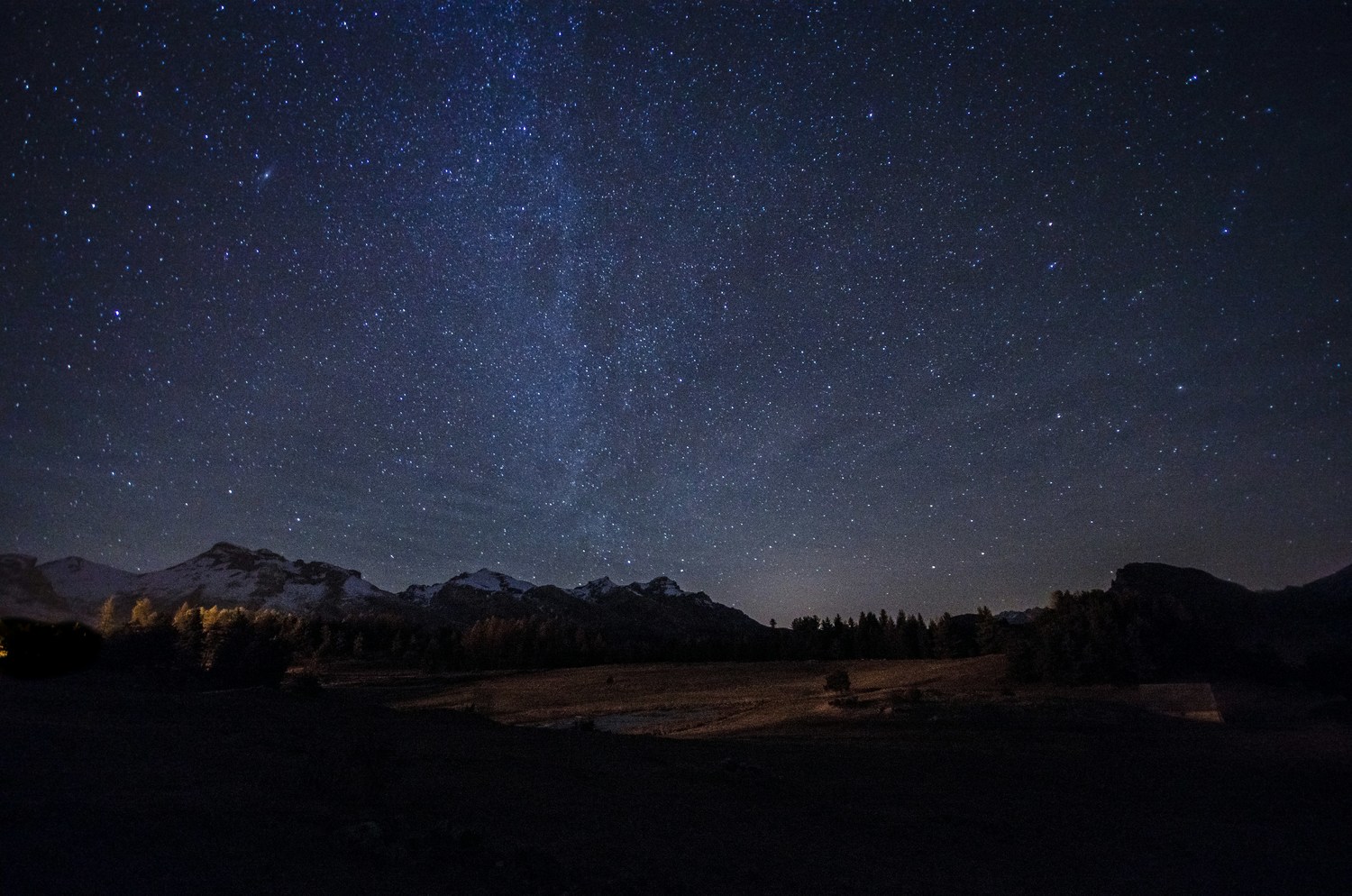
Artificial light from a goldmine proposed for the Sperrins could harm the welfare of nearby residents as well as ‘dark sky’ tourism, an inquiry into the plans has heard.
The public inquiry into Dalradian Gold’s proposed scheme heard that the proposals could harm sustainable development plans for the area – part of an ongoing dispute among the respective parties.
The North American company said any adverse effects would be negligible.
Over the course of this week, the inquiry heard submissions in relation to possible light pollution that the proposed mining scheme raises.
Fermanagh and Omagh District Council (FODC) and a number of third-party objectors argued the proposed mine's artificial lighting would be damaging both to the welfare of local residents, to the local authority's sustainable development plans – which include astro-tourism tied to ‘dark sky’ viewpoints – and to the local economy in broader terms.
Fintan McAleer, a third-party objector, argued the mine’s lighting installations could cost the local economy millions over the course of the project’s life span.
“The night sky is an intrinsic part of these settlements and their ancient monuments," he said, stressing that the “sky glare” Dalradian’s mine would produce “would directly disrupt” this.
Mr McAleer told the inquiry that “the introduction of artificial sky glare on the horizon by this facility would permanently disconnect these ancient features from the night vistas they were built to observe”.
He said this would be “an unacceptable derogation” of the Sperrins’ designated cultural and conservation protections, “violating established heritage frameworks”.
Mr McAleer also argued that this would amount to an estimated “total economic liability of £10-15 million" across the mine’s lifetime, negatively impacting a range of economic activities including various kinds of “eco-tourism”.
He said: “Degraded and industrial visual glare translates to an estimated £300,000 per year in multi-sector hospitality lost. Compounded over a 20-year life cycle, this amounts to a £6 million cash loss”.
Third-party objector Sean Tracey asked whether the Department for Infrastructure (DfI) would consider consulting an accredited dark sky organisation on the proposed conditions for lighting installation.
Julie Ellison, a departmental solicitor with DfI, later said it “would take steps in relation to dark sky considerations”.
“Zero glare”
Experts hired by Dalradian, along with a barrister acting for the company, argued that any adverse effects arising from the project’s lighting installations, including “glare” or “spill”, would be negligible.
One lighting expert hired by the firm, Dominic Merrick, argued the planned scheme would emit roughly as much artificial light as the nearby Greencastle parish, home to around 200 people.
Mr Merrick said "there would be no glare and no spill from any fitting” at the proposed mining site. He argued that advances in LED technology meant “modern issues surrounding glare can be tightly controlled.”
Turning to nearby dark sky observatories, Mr Merrick mentioned a specific proposed light fitting as an example. He explained: “That fitting would not be perceivable from such a distance.”
Mary Brolly, a solicitor appearing with the Save Our Sperrins campaign group, voiced concerns around the dimensions of the proposed site where the light fittings would be installed.
"Approximately 15 metres above ground level, there’s the gantry,” she said. “And then you’re allowing for two metres above that, which means 17 metres. So we’re somewhat concerned by the description of so-called ‘low-level lighting’ here.”
Another third-party objector, Barbara Ward, argued Dalradian’s exploratory work to date had already brought considerable artificial light pollution to the area and disruption to residents’ lives.
“As a resident who can look out onto the site from my conservatory, there are lights in the compound day and night and they stand out like a sore thumb,” she said.
Questions were raised over modelling work submitted by one of Dalradian’s experts and whether the company is proposing sufficient mitigation where lighting impacts are concerned.
To assist with third parties’ understanding of the lighting conditions under consideration, Commissioner Cathy McKeary read out one of the conditions proposed by Fermanagh and Omagh District Council.
This would involve an updated lighting plan to be agreed with the council, which would include restrictions and mitigations.
Although there would be 13 interior windows, Mr Merrick for Dalradian said there would be no windows on the proposed site administration building's exterior. As such, he said, there would be no light escaping from the facility.
Addressing any possible light pollution from vehicles entering, exiting and moving through the planned site, he said “There is no requirement for lighting for vehicle movement...country roads don’t have lights, it’s as simple as that”.
Mr Merrick described the criticism by third-party objectors as a “mischaracterisation” and “caricature” of his work.
Turning to comments made by Ms Brolly and Mr Tracey, Scott Lyness KC, a barrister acting for Dalradian, said he “would entirely reject any suggestions from him or Ms Brolly that there are any deficiencies in our work”.
The inquiry is set to resume in September.