 By
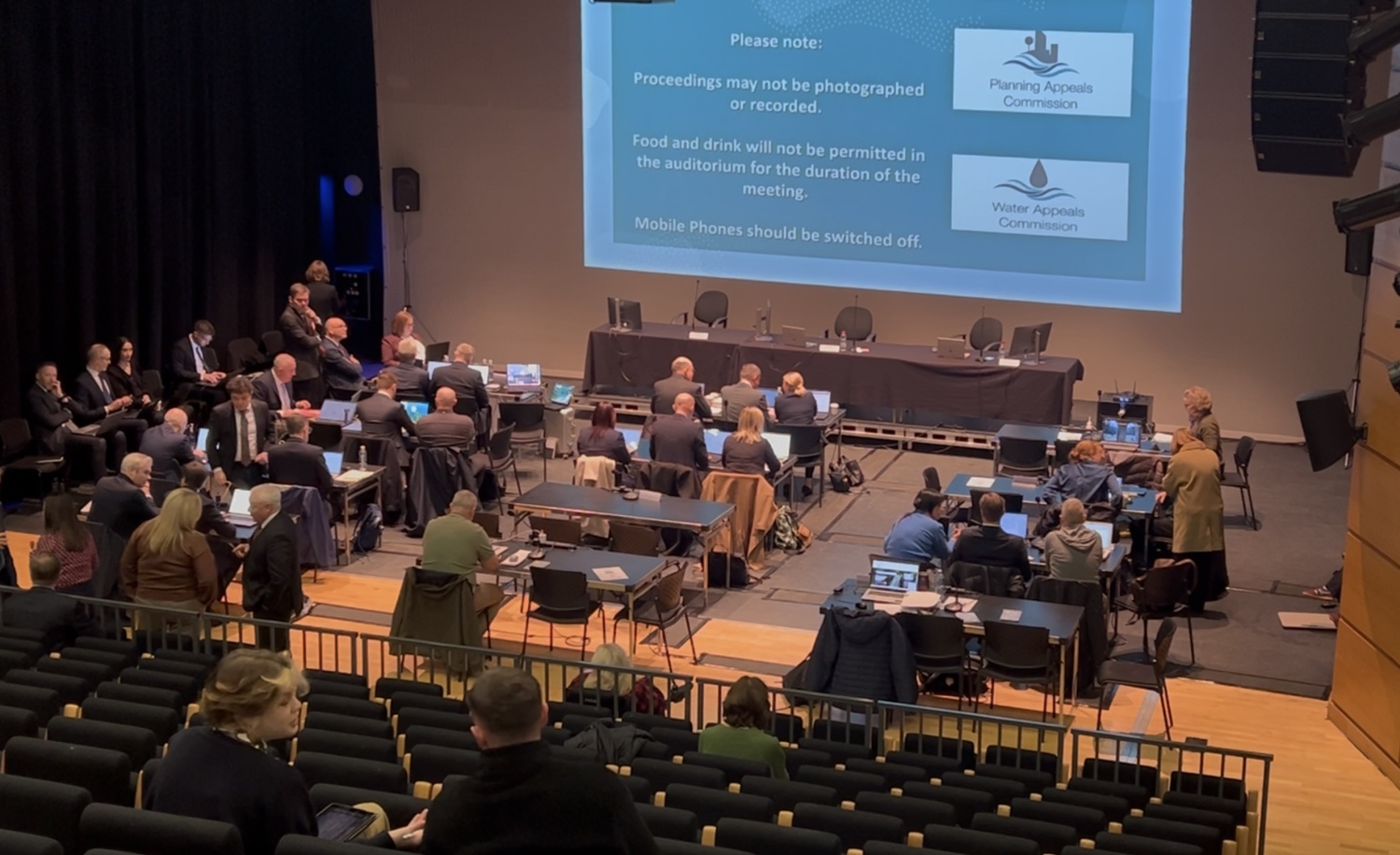
After 52 days in which dozens of experts dissected thousands of pages of evidence on a controversial gold mine in Northern Ireland, a long-awaited public inquiry into the plan has finally closed.
Battle lines were first drawn over the future of a rural County Tyrone village, and connected waterways running through counties Donegal and Derry to the sea, when Dalradian Gold arrived 17 years ago.
In the time since, the multinational’s bid to mine in the Sperrin Mountains designated area of outstanding natural beauty amassed almost 50,000 objections.
Dalradian Gold, owned by US investment firm Orion Resource Partners, says it will build an environmentally responsible mine to extract metals worth about £26 billion.
It also states the project will create 350 jobs and boost the local economy.
Backlash to the planning application saw the North’s former Infrastructure Minister Nichola Mallon call a public inquiry into the proposed gold, silver, copper and metal mine in 2020.
Opposition to the application comes from a range of sources, from the local council to campaign group Save Our Sperrins and Ireland’s national trust, An Taisce.
After two false starts, the Planning Appeals Commission (PAC) began examining the application at Omagh's Strule Arts Centre in April.
The process, originally timetabled for 20 days, has been anything but plain sailing.
Chaired by Jaqueline McParland with support from Cathy McKeary and Kenneth Donaghey, the commissioners soon doubled the schedule as discussions took longer than anticipated.
Tempers frayed during hearings, with commissioners calling police more than once to remove people from the auditorium.
Cormac McAleer, a Save Our Sperrins co-founder, and retired roads engineer, Douglas Hill, were also excluded by a PAC trying to reassert authority over a very messy process.
In stark contrast to the Omagh bomb inquiry, proceedings have not been recorded and there is no official transcript of what has been said.
Dalradian Gold hopes to mine 8.7 million tonnes of material to get 99 tonnes of gold, 48 tonnes of silver and 15,000 tonnes of copper over the 20-25 year life of its proposed Greencastle mine.
To deliver that, the inquiry heard it plans to set 16 explosions a day, in two bursts, to extract potential ore.
Firm representatives said this will be processed on site, and that it no longer plans to use cyanide, which is still referenced in the application.
The multinational’s plans could also generate up to £500m a year for King Charles.
The Crown Estate, which has licenced Dalradian, legally owns the gold and silver beneath Northern Ireland. The inquiry heard the British monarch’s property portfolio, already worth billions, would take 4 percent of the mine’s annual gold sales, if approved.
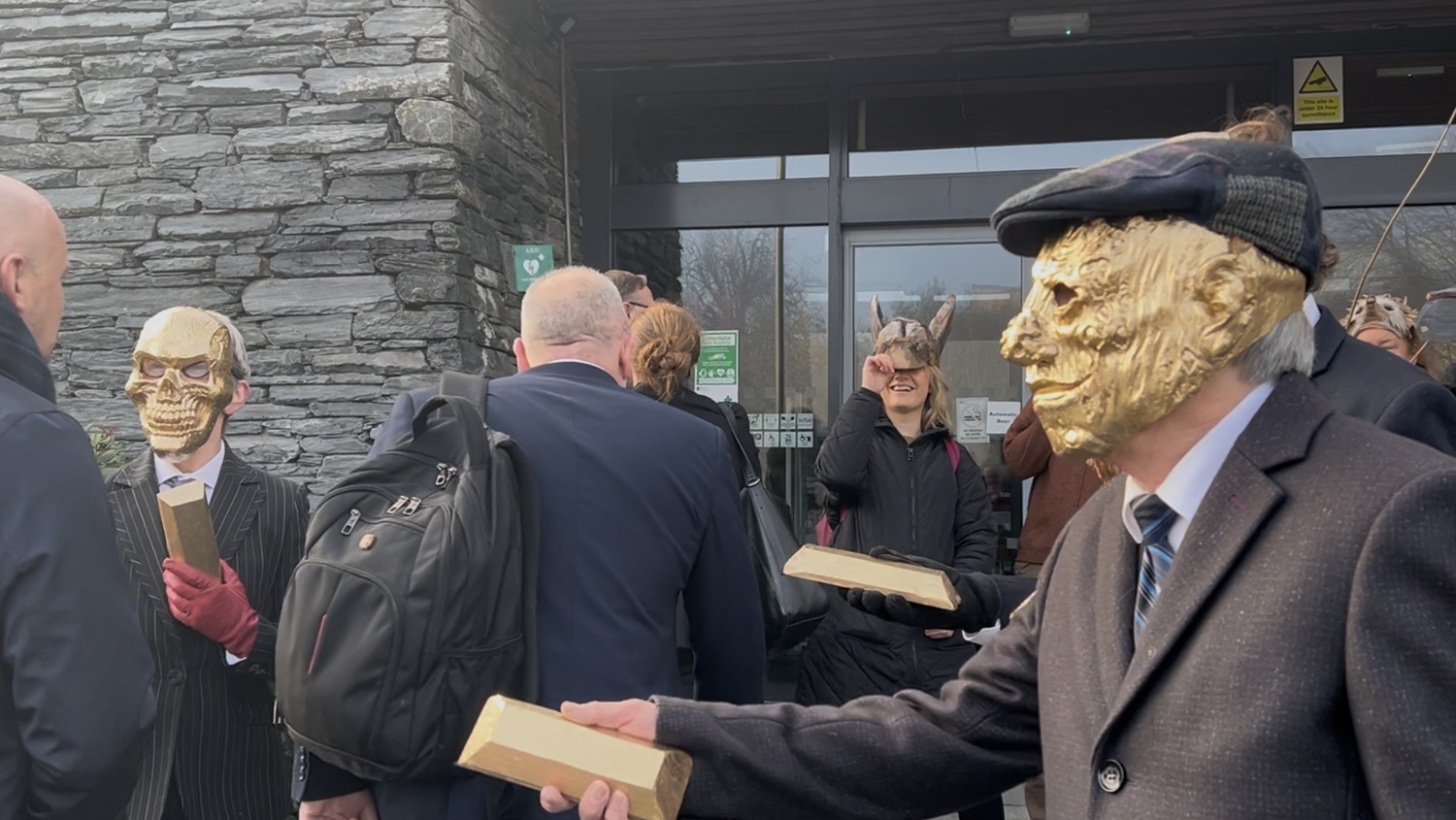
Anti-mine campaigners outside of the inquiry building. Photo by Shauna Corr
Opposition
Fermanagh and Omagh District Council opposes the application on a range of grounds, including environmental, community and tourism impacts.
Some locals said they live in fear of potential impacts like air and water pollution, landslides, biodiversity loss and increased traffic. One asked if local residents were just “mere collateral damage”.
Concerns were also raised about the effect daily blasts would have on a school, nursery and GAA club just over 1 km from the mine as well as two historic Catholic churches and their cemeteries.
The application includes requests to discharge potential pollutants into waters supporting protected species like Atlantic Salmon and freshwater pearl mussels, and to dig up peatland despite government plans to conserve and restore them to hold greenhouse gases.
Dalradian said it will use 44,000 tonnes of ammonium nitrate explosives, which it admitted will add nitrate pollution to already failing waterways.
Police escorts for their delivery could cost the Police Service of Northern Ireland (PSNI) up to £3 million a year according to third-party estimates, although no official figures were provided to the inquiry and the PSNI did not take part.
Through over 300 hours of discussion, Dalradian’s team of lawyers, global experts and workers outlined how it would deliver economic benefits while causing very little environmental damage.
Members of a group supporting the mine, the Silent Majority, were often absent from the inquiry. But they were represented by counsel Philip McAvoy, and various representatives of planning consultancy Gravis Planning.
Third party objectors, including locals who gave up work and holidays to be there, hit out at what they branded a “Goldilocks application” while outlining “gaping holes” in evidence.
Throughout the process, Stormont departments were often found wanting.
In one instance, the Department for Infrastructure (DfI) spent almost £400,000 on a report into the mine waste plans, but failed to submit it to the PAC.
On another occasion, it emerged that the Northern Ireland Environment Agency has not yet assessed the impact of the mine on protected European sites, despite being legally required to do so.
The commission will now consider the evidence and report back to DfI by February 2028.
It may well be up to a new minister, appointed after next May's Stormont elections, who ultimately makes the decision.
Read all our coverage of the Sperrins public inquiry here.