 By
By
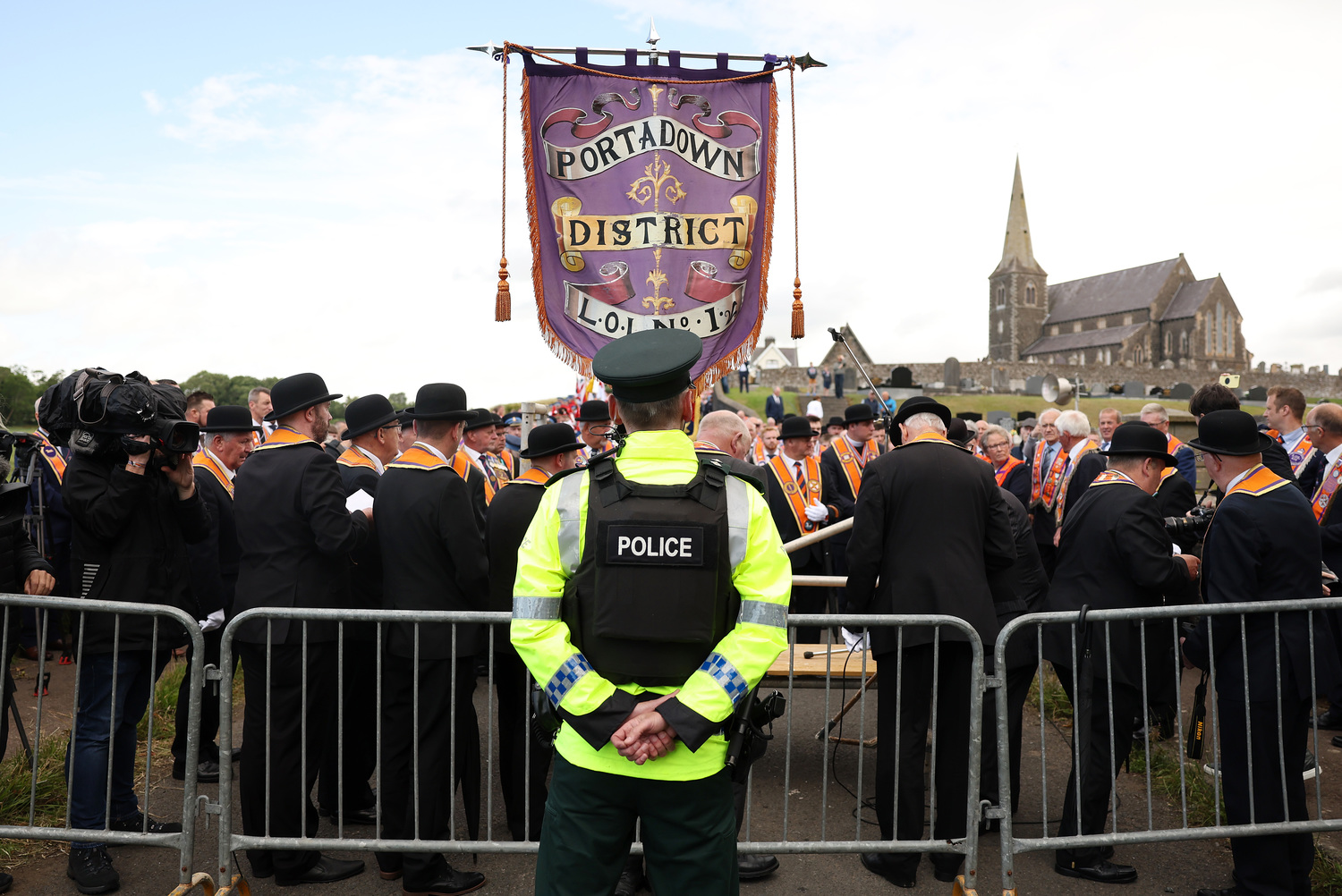
Annual Orange Order parade to Drumcree Church in Portadown, July 2023. Photo by Jonathan Porter, Press Eye
More than 93% of unionist parades went ahead without any restrictions over the past decade, it can be revealed.
Of the 22,679 notified unionist parades that took place between April 2016 and March 2026, only 1,454 (6.4%) had any conditions imposed on them by the Parades Commission.
Unionist parades accounted for 63% of the 35,692 parades that took place in the past ten years.
Republican parades made up 909 (2.5%) of the total, and 12,104 (34%) were classed as ‘other’, which covers everything from Pride parades to vintage car rallies.
The Parades Commission has come under intense scrutiny after the High Court quashed its decision to restrict this year’s Drumcree parade, ruling that it had acted unlawfully due to serious procedural failures.
Mr Justice McAlinden referred to “errors”, “shortcuts”, and “sloppy procedures” in the process.
Orangemen have been prevented from marching on the nationalist Garvaghy Road in Portadown each year since 1998.
Unionist politicians have called for the resignation of the commissioners following the High Court ruling, stating that the Commission does not have the confidence of the unionist community.
Following the High Court decision, Phillip Brett DUP MLA said the Commission had been “exposed” and was "an organisation which is anti-Orange and anti-unionist".
The Ulster Bands Forum, which represents over 600 bands, said there were “long-held concerns within the band community about the attitude of this statutory body towards our culture and traditions."
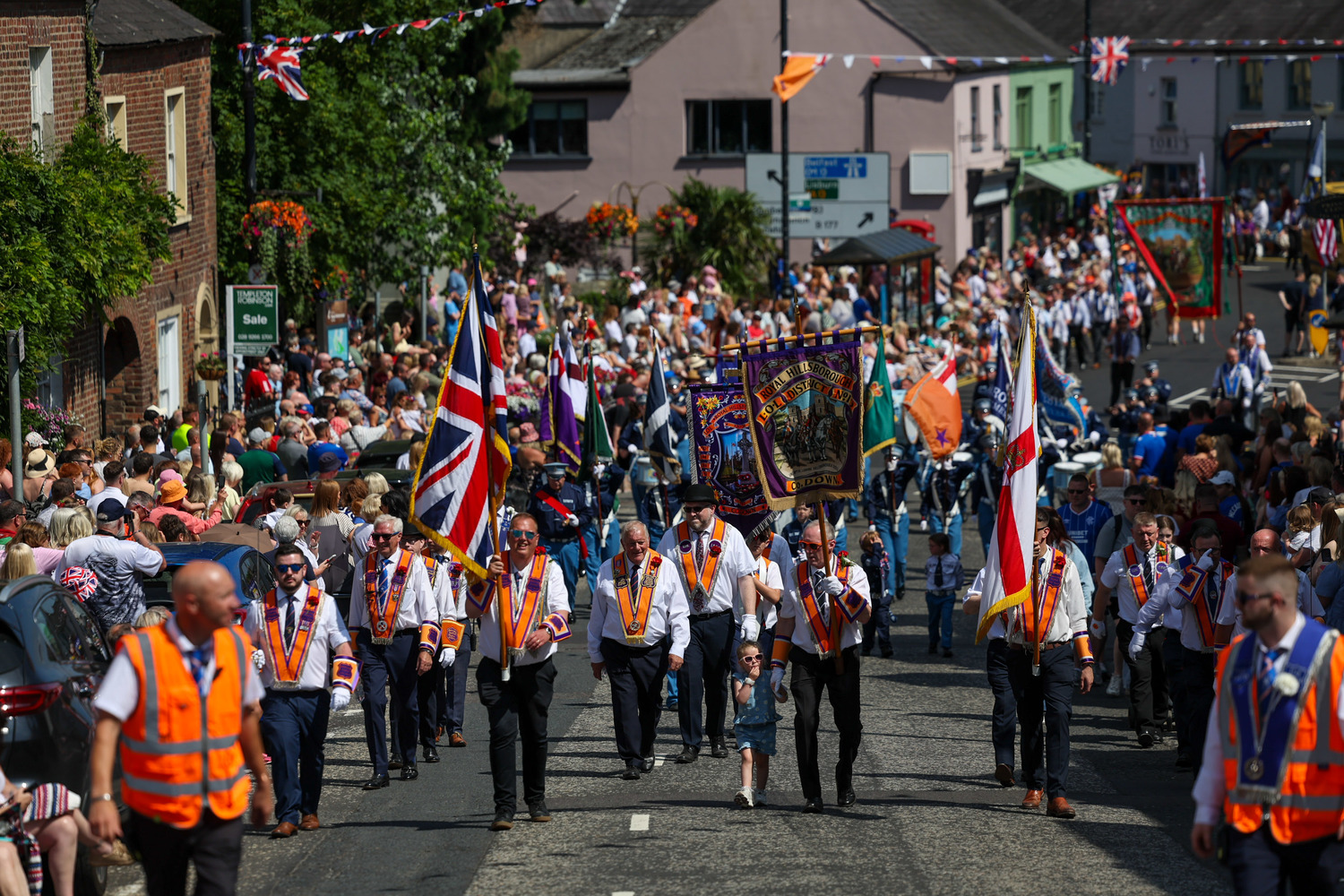
Twelfth of July celebrations in Royal Hillsborough, Co. Down. Photo by Matt Mackey, Press Eye
Parades
An analysis by The Detail of Parades Commission annual accounts indicates that only a small number of unionist parades are impacted each year.
There were 2,507 notified unionist parades in the last financial year up to March 2026, with only 137 having any restrictions imposed on them.
51 of these relate to weekly parades in Portadown to protest the Drumcree decision.
The 137 parades were classed as ‘sensitive’, meaning that the Parades Commission deemed them to have the potential to raise concerns and community tensions.
For example, in placing restrictions on one parade in north Belfast last year, the Commission noted that it was “considered offensive by [the local nationalist] community, due to the perceived associations of the parades with paramilitary groups who were responsible for many killings in the Ardoyne area”.
The commission cannot ban parades outright, but can place conditions including on the route taken, the size of the parade, or the type of music played.
For example, marching bands may be ordered to play only a single drumbeat instead of full music or songs when passing sensitive areas, such as Catholic churches.
Of the 137 unionist marches that had conditions imposed on them, only a portion of those had their routes restricted .
Other than the 51 weekly Portadown parades, there were 38 parades which had restrictions on their route.
In practice this means that around 1.5% of all unionist parades had restrictions imposed on their routes last year.
These 38 parades with route restrictions were largely concentrated in a few areas of Northern Ireland, with some involving the same band or route.
This included 11 in north or south Belfast, four in Lurgan, and four in Dunloy, Co Antrim.
Even if the Portadown parade is allowed to go down the disputed Garvaghy Road in the future, it will still likely be with conditions imposed.
A prominent Portadown Orangeman recently suggested that a march with no music might be acceptable.
Overall, there were 26 times as many unionist parades (2,507) than republican marches (96) in 2025/26.
This reflects the importance that the parading tradition holds within the unionist community and the more peripheral role it plays within nationalism.
Of the 96 republican parades, only three had conditions imposed on them.
There were also more than twice as many unionist parades than all ‘other’ parades combined (1,210).
The ‘other’ category covers all charity, civic, rural and sporting events, ranging from Pride parades, trade union rallies, and charity tractor runs.
Only one ‘other’ event, a demonstration in Ballymena, had conditions imposed on it last year.
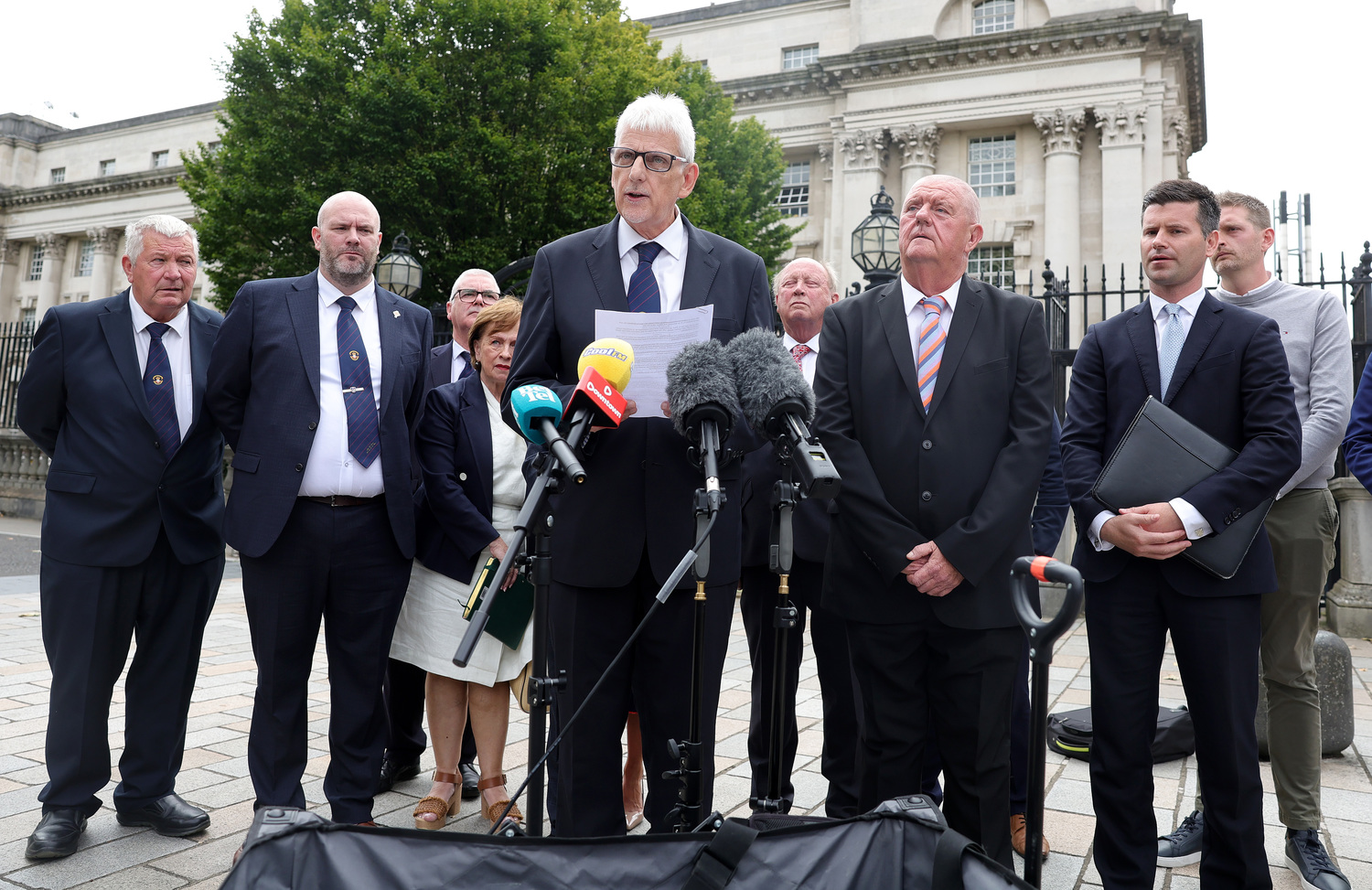
Senior Portadown Orangeman Nigel Dawson talking to the court following the recent High Court ruling. Picture by Jonathan Porter, PressEye
Alternatives
Dr Dominic Bryan, an expert on parades at Queen’s University Belfast, said unionist opposition to the Parades Commission has been constant since it was established in 1998.
“It's a bit of a myth for them to say that they now lack confidence, when they've actually been saying that they have no confidence in the Parades Commission since day one.”
He said confidence in the Commission “has taken a blow” following the High Court ruling, but that attitudes in the wider unionist community “would be quite mixed”.
“There would be quite a lot of people who would probably think that the Parades Commission is the right way decisions should be made.”
The most recent Northern Ireland Life and Times Survey question on parades was asked in 2022.
A majority of all respondents (74%), and a plurality of Protestants, agreed or strongly agreed that “Parades should only be allowed if the organisers and local residents agree to the arrangements.”
This was an increase on the 70% who supported that view in 2015.
Dr Bryan, whose work influenced the setting up of the Parades Commission, said there were legitimate questions about how decisions were made, such as the lack of an appeal process and wider issues of transparency.
“So, for example, the police say there's a security issue, and that the parade is a problem. How transparent is that? The evidence you get from the police, has that changed over the years? Those are all utterly reasonable questions when making a decision,” he said.
“What I think is more difficult to work out is what alternative do they want?”
Given the low number of parades that currently have any conditions imposed on them, he said it was possible any new system could mean greater restrictions, not less.
There have already been a number of reviews and inquiries into the Parades Commission over the years, which did not lead to a change of the current system, he added.
“So it's not as if we haven't been down this road quite a few times before, if you'll forgive the pun.”
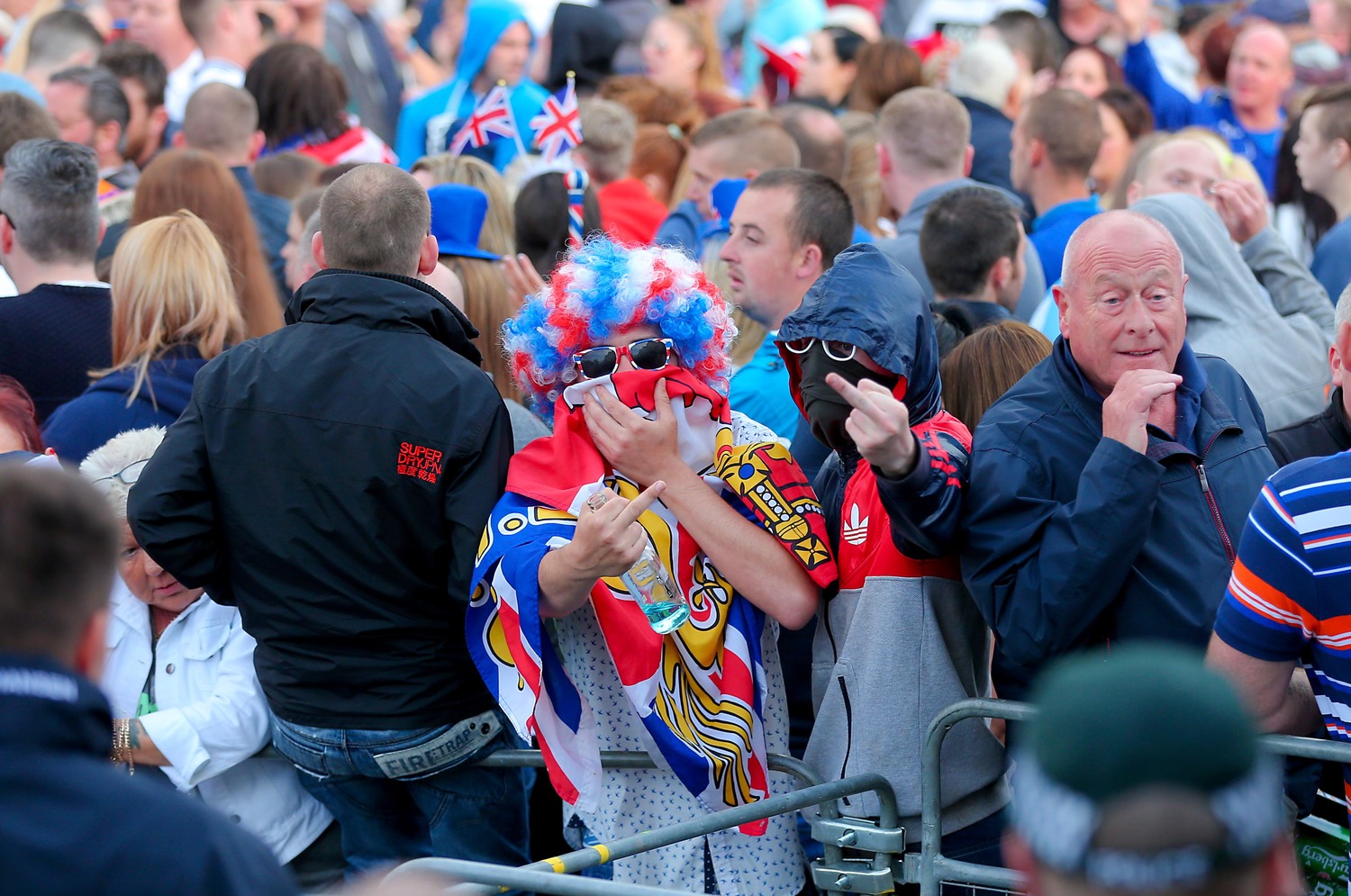
Police riot officers dealing with violence at the Orange Order parade as it reaches its stopping point on the Woodvale road in North Belfast, 2015. Picture by Kevin Scott, Press Eye
Protests
Protests against unionists or republican parades are also now rare, when compared with even a decade ago.
In the last financial year, there were 17 notified parade-related protests, almost all of which were protests by evangelical churches against Pride parades.
The most recent protest against a unionist or republican parade was in September 2024, when the Crumlin and Ardoyne Residents Association (CARA) protested against an Orange parade in north Belfast.
Before that, in 2018, there was a protest against a republican anti-internment parade.
That compares with regular protests a decade ago.
A decade ago, in 2016/2017, there were 17 notified parade-related protests. Of these 14 related to nationalist or unionist parades, while the remainder were against Belfast pride.
That year saw a much higher than usual number of restricted parades, due to nightly parades by the Ligoniel Combine in north Belfast.
This changed following the agreement between Ligoniel Lodges and the Crumlin and Ardoyne Residents Association in September 2016.
The other anomalies over the past decade were in 2020/21 and 2021/22, where many parades were cancelled due to Covid.