Hero color 010625jp1emmettmcconomy002
From South Armagh to Strasbourg: the long fight for justice after the Troubles
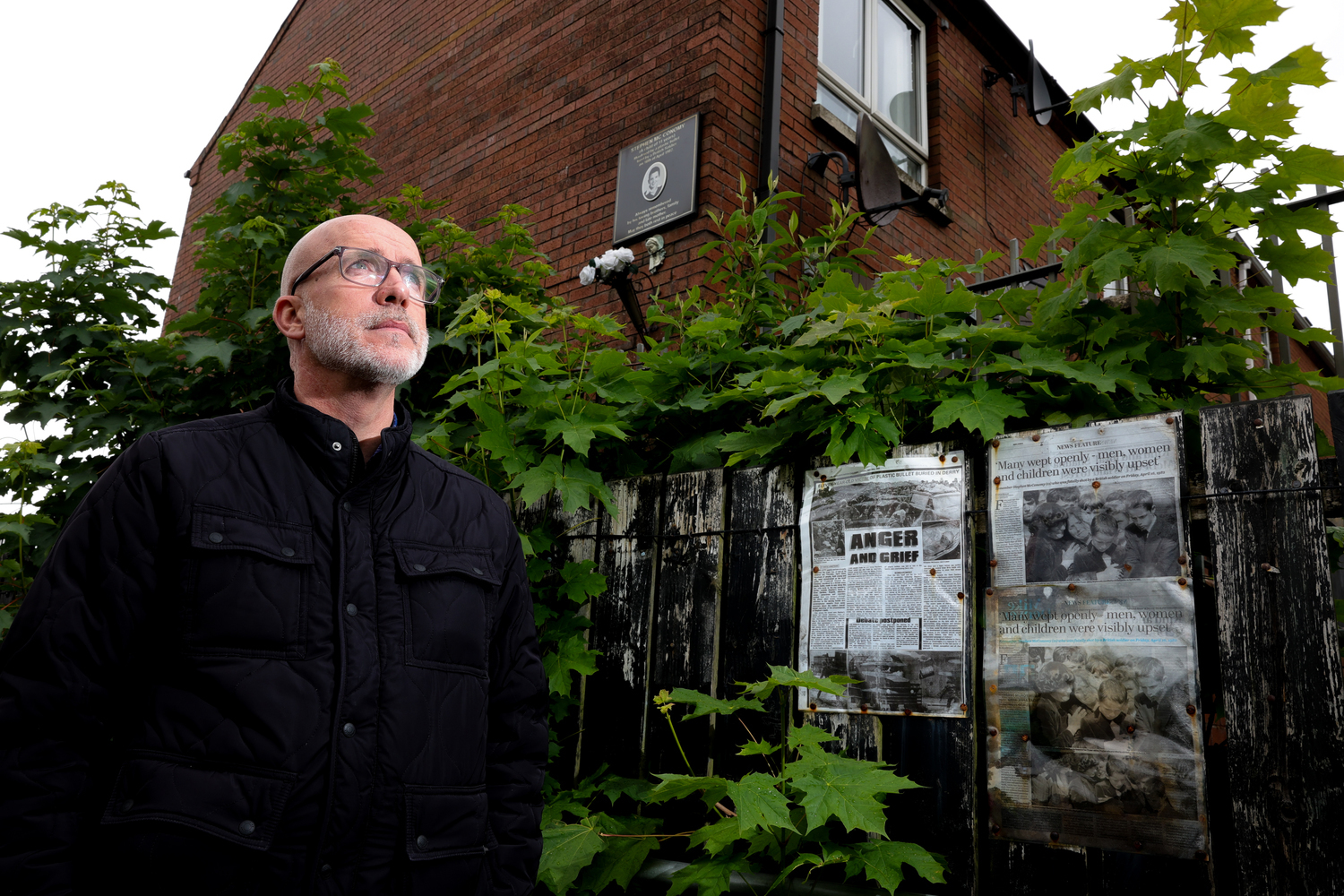
Emmett McConomy in front of a memorial for his brother Stephen, who was killed by a plastic bullet in 1982. Photo by Press Eye

Across Northern Ireland, families have spent decades challenging flawed investigations, withheld evidence and official silence. Molly Quell speaks with families who turned to the European Court of Human Rights in Strasbourg in search of accountability.

==

Trevor Brecknell was celebrating the birth of his daughter Roisin when gunmen opened fire inside a pub in south Armagh in 1975. The 32-year old was killed, along with two others.

No one was ever charged. Mr Brecknell's son, Alan, was just seven years old.

For decades, the killing was one of thousands from the Troubles that never received a full accounting. Then, years later, new information emerged: a former officer in the Royal Ulster Constabulary gave evidence linking a series of sectarian attacks to loyalist paramilitaries active at the time of Brecknell’s death. Armed with that affidavit, the family asked the authorities to reopen the case.

They were refused.

Instead, the Brecknells took their fight beyond the UK courts to the European Court of Human Rights. In 2007, judges ruled that the British government had failed to respond properly to the new evidence. When credible information comes to light, the court held, the state has an obligation to take further investigative steps.

The decision helped establish what has become known as the Brecknell Test, a legal standard used to determine when authorities must revisit unresolved deaths.

The ruling established a procedural standard that has since been cited far beyond Northern Ireland.

In the Netherlands, the parents of a young woman who was murdered in their attic asked for a new trial for a man initially acquitted of the crime. In Hong Kong, Filipino domestic workers demanded the government reopen an investigation into their working conditions. In Romania, the families of victims killed during protests in 1990 said the state never looked into their loved ones’ deaths.

While the Brecknell Test is cited in legal decisions worldwide, the standard is used most frequently at home, as many families are still struggling to find justice and accountability.

Alan Brecknell, who now works helping other victims at the Pat Finucane Centre, hears his family name regularly cited in legal decisions. “I feel a measure of pride when I hear my name in court,” he said, though “It’s always a bit surreal.”

The precedent was used to reopen the investigation into the 1989 killing of lawyer Pat Finucane by loyalist paramilitaries, the 1972 shooting death in disputed circumstances of Jean Smyth, and into the treatment of the Hooded Men, who were subjected to British Army methods that were later judged to be so severe they would now be characterised as torture.

Brecknell’s case was not unique. Across Northern Ireland, families who had lost relatives during the conflict had long argued that initial investigations were cursory, opaque or compromised.

Many would turn to Strasbourg, forcing the UK government to account for how it handled killings involving both paramilitaries and state forces.

Over time, a series of rulings from the European court reshaped the legal landscape. They set new requirements for how deaths must be investigated, expanded what information families are entitled to see, and limited the government’s ability to withhold evidence on national security grounds.

For some, those decisions brought long-delayed answers. For others, they exposed the limits of a system that could acknowledge failures without delivering justice.

One of those families was that of Kathleen Thompson. In 1971, the mother of six was shot dead in the back garden of her home by British Army soldiers during a raid on a neighbouring house. The investigation that followed was brief. The soldier who fired the fatal shot, known only as Soldier D, was interviewed for just 15 minutes. He said he had come under fire and acted in self-defence.

For decades, Ms Thompson’s children were denied access to key information about the case, including the identity of the shooter. Like the Brecknell family, they filed appeal after appeal, pushing for a more thorough examination of what had happened that day.

“You become afraid to expect anything,” Minty Thompson, who was 12 when she saw her mother’s body lying outside their home, said of the process of being rebuffed at nearly every turn. “You don’t have emotions, you just go on,” she said.

In 2003, the High Court in Northern Ireland found that the original investigation had been inadequate, citing decisions from the European Court of Human Rights. Nearly two decades later, a fresh inquest concluded that the killing was unjustified, dismissing the soldier’s account as “contrived and self-serving.”

Ms Thompson said the ruling, some thirty years after her mother’s death, helped clarify what her family had long believed. "I don't think you ever really get closure," she said, of the family's own experience, while insisting that not following through on behalf of others would have been worse. “I think the guilt of not doing anything would have killed us.”
Hero color 010625jp2mintythompson004
"Transformational"
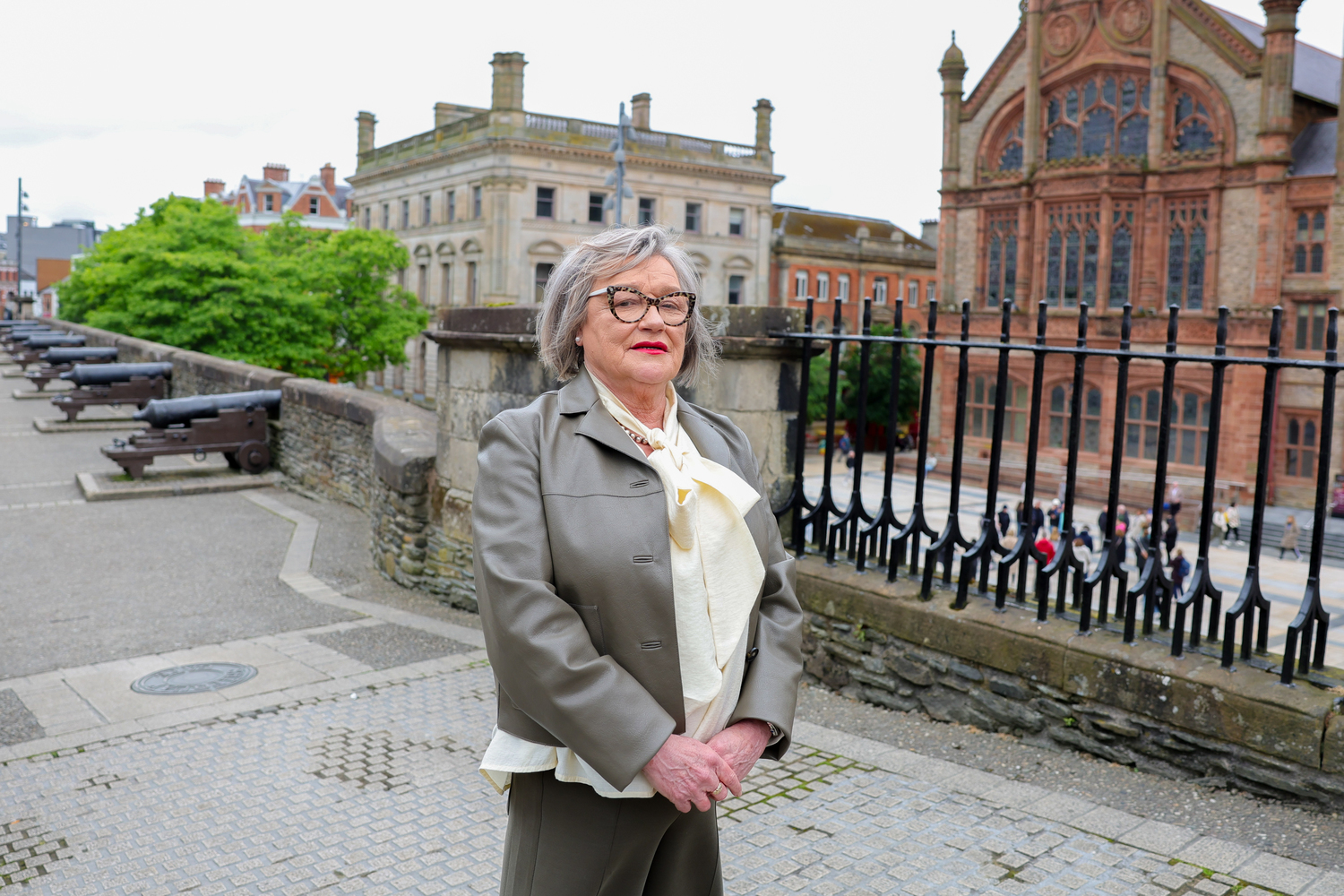
Minty Thompson in Derry. Photo by Press Eye

Cases like Thompson’s illustrate the practical effect of Strasbourg’s intervention. Over time, the court’s rulings, many grounded in the right to life under the European Convention, forced changes in how deaths linked to the Troubles are examined.

Authorities are now required to take additional investigative steps when credible new evidence emerges. Inquests have expanded in scope, with families granted greater access to documents and witnesses. Prosecutors must provide reasons when they decide not to bring charges. And judges, rather than government ministers, increasingly determine whether material can be withheld on national security grounds.

These decisions were “transformational,” said Daniel Holder of the Committee on the Administration of Justice, a Belfast-based human rights organisation.

A 2024 report, Bitter Legacy: State Impunity in the Northern Ireland Conflict, found the British government “not only engaged in collusion but also blocked proper police investigations into conflict-related killings to protect implicated security force members and agents.”

Drafted by a panel of international human rights experts, the document condemned London for “a widespread, systematic, and systemic practice of impunity.”

In many cases, Mr Holder said, meaningful investigations only took place after intervention from Strasbourg. “The ordinary justice system was unwilling and incapable.”

Those decisions are binding not just on the United Kingdom, but on all of the member states of the Council of Europe and are often cited further afield.

There have been “huge ripple effects across Europe,” Mr Holder said.

All of those changes were only possible because of the “tenacity of families, lawyers and NGOs” who were willing to fight all the way to Strasbourg and back, he added.

In 2023, more than fifty years on from the start of the violence, the Irish government again took the fight for justice to Strasbourg, in opposition to the Legacy and Reconciliation Bill.

Ireland said the Bill, which ended most prosecutions for most killings by militant groups and British soldiers, violated the convention.

The intra-state procedure at the court is rarely used, there have only been 39 such cases in the court’s history, but it was the second time Dublin had challenged the British government in Strasbourg.

In 1971, Ireland filed an intra-state case against the United Kingdom on behalf of 14 “Hooden Men” who had been subjected to so-called ‘in-depth’ interrogation techniques.

In 1978, the court held that the five techniques of interrogation employed by the British authorities amounted to “inhuman and degrading treatment.” This decision set the standard for what authorities across Europe could do to prisoners and has been cited in hundreds of other cases.

The Police Service of Northern Ireland eventually apologised for the mistreatment after the UK Supreme Court ruled, citing the intra-state case and the Brecknell test, the police had failed to investigate complaints about the abuse.

Hero color pe 00498394  1
Limits
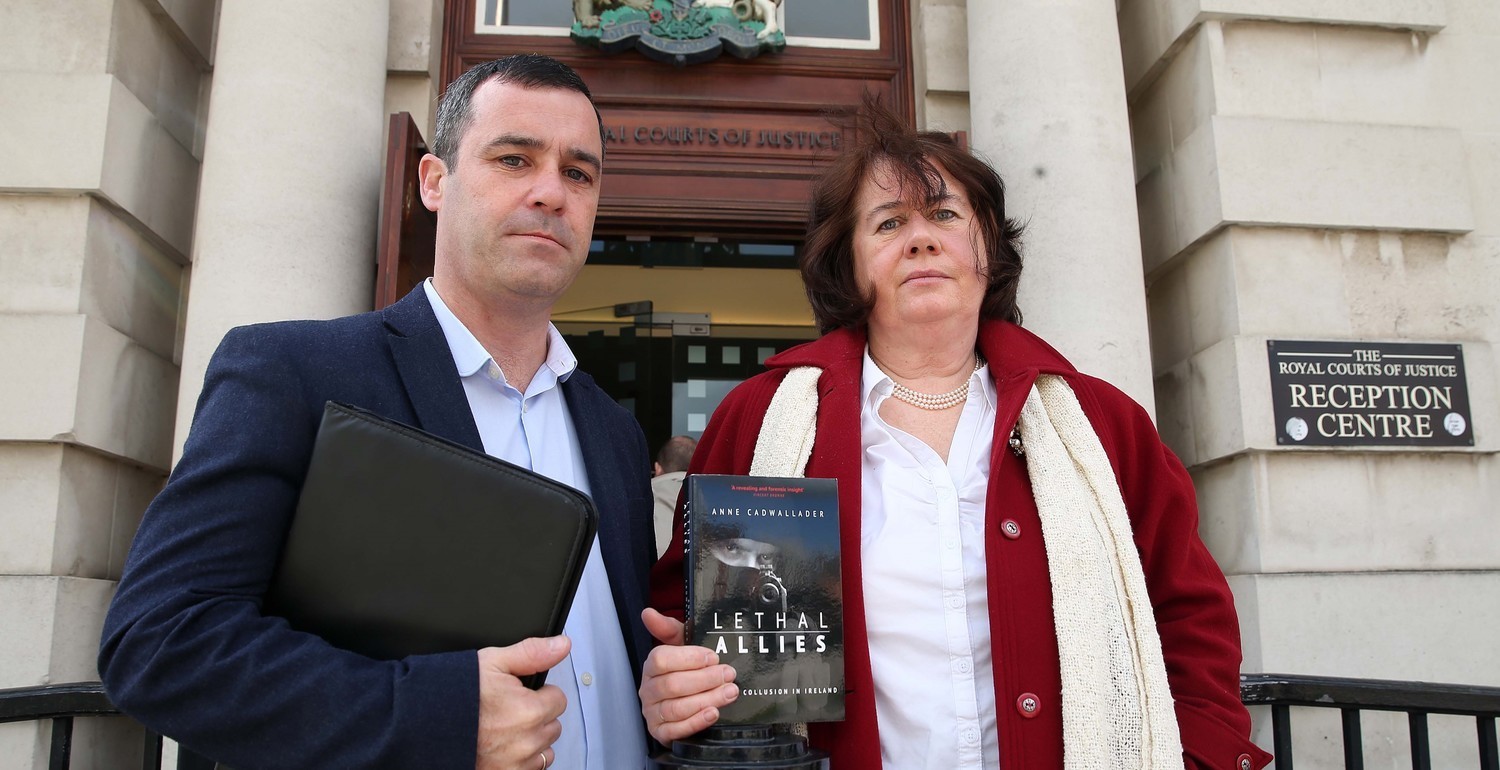
Alan Brecknell with Pat Finucane Centre colleague Anne Cadwallader in 2015. Photo by Press Eye

Strasbourg’s intervention has not always led to prosecutions. Of the more than 40 cases from the Troubles brought before the European court, only a fraction have been decided in favour of applicants. Even when families succeed, the outcome is often limited to a finding that the original investigation was flawed.

The case of Martin McCaughey illustrates those limits. Mr McCaughey, a member of the IRA, was shot dead by undercover British forces in 1990. In 2013, the European court ruled that the investigation into his killing had been insufficient. A subsequent inquiry, however, found the use of lethal force to be justified.

His sister, Sally Gribben, challenged that conclusion, returning to Strasbourg in an effort to overturn it. In 2022, the court rejected the case as inadmissible.

Across Northern Ireland, similar patterns have played out. Families spend years, sometimes decades, seeking new inquests, access to files, or acknowledgment of wrongdoing. In some cases, they succeed in exposing failures or securing revised findings. In others, the process ends without accountability for those responsible.

Only a small number of soldiers and police officers have ever been charged in connection with violence during the Troubles.

For some families, the goal has shifted. Alan Brecknell, who now works with other victims through the Pat Finucane Centre, said he no longer seeks to see anyone imprisoned for his father’s killing. “I don’t want to take a father or grandfather away from another family,” he said.

What he and others have pursued instead is something narrower, but no less difficult to obtain: a full account of what happened, and an acknowledgment that the state failed in its duty to investigate.

That pursuit continues even as the legal framework underpinning it faces political pressure. In recent years, some figures in the UK have argued for withdrawing from the European Convention on Human Rights, the treaty that established the Strasbourg court. Proposals backed by some politicians have suggested that many of the convention’s protections are already reflected in domestic law.

Guy Dampier, a senior researcher at the London-based Prosperity Institute, co-authored a white paper last year with former Home Secretary Suella Braverman. “The convention has strayed significantly from its original purpose,” he argued.

Mr Dampier said that parliament could do a full evaluation of Strasbourg court decisions to consider what would need to be incorporated into UK law, akin to what took place after Brexit.

Critics of that approach say removing the option of going to Strasbourg would close off one of the few remaining avenues for families seeking answers about unresolved killings.

Recent developments suggest those battles are far from over. In May 2026, the UK Supreme Court ruled that controversial Troubles legacy legislation did not unlawfully diminish victims’ rights, overturning earlier findings from courts in Belfast.

The case had been brought by the Labour government after a series of legal challenges by victims and survivors of violence during the Troubles.

Rights groups described the judgment as a significant setback. Amnesty International said the ruling represented a “bitter blow to victims” and warned that “the past will remain the present until new legislation ends their trauma and delivers long overdue answers.”

Lawyers acting for families said the ruling “left victims and families in a state of flux” and would “likely lead to more lengthy litigation.”

“Our clients will now consider taking this matter to the European Court of Human Rights,” Gavin Booth of Phoenix Law said.

“The victims aren’t going anywhere,” said Emmett McConomy, whose 11-year-old brother Stephen was shot by a British soldier in 1982. No one has ever been charged with the killing. Decades on, Mr McConomy and his family are still pressing for further investigation. “The families want accountability,” he said.

For families in Northern Ireland, the impact of Strasbourg has been both profound and incomplete. It has forced the state to revisit cases that might otherwise have remained closed, and to disclose information that was once withheld. It has established legal standards that continue to shape how investigations are conducted.

But it has not, in most cases, delivered the kind of justice that many families once hoped for.

Even so, for those who have spent decades pressing for answers, the court remains a crucial, if imperfect, mechanism.

“The rule of law is still capable of working,” Alan Brecknell said. “Even if it doesn’t work every time.”

Molly Quell is a journalist based in The Hague, where she has covers international law and justice.

Receive The Detail story alerts by email
Subscribe on Substack