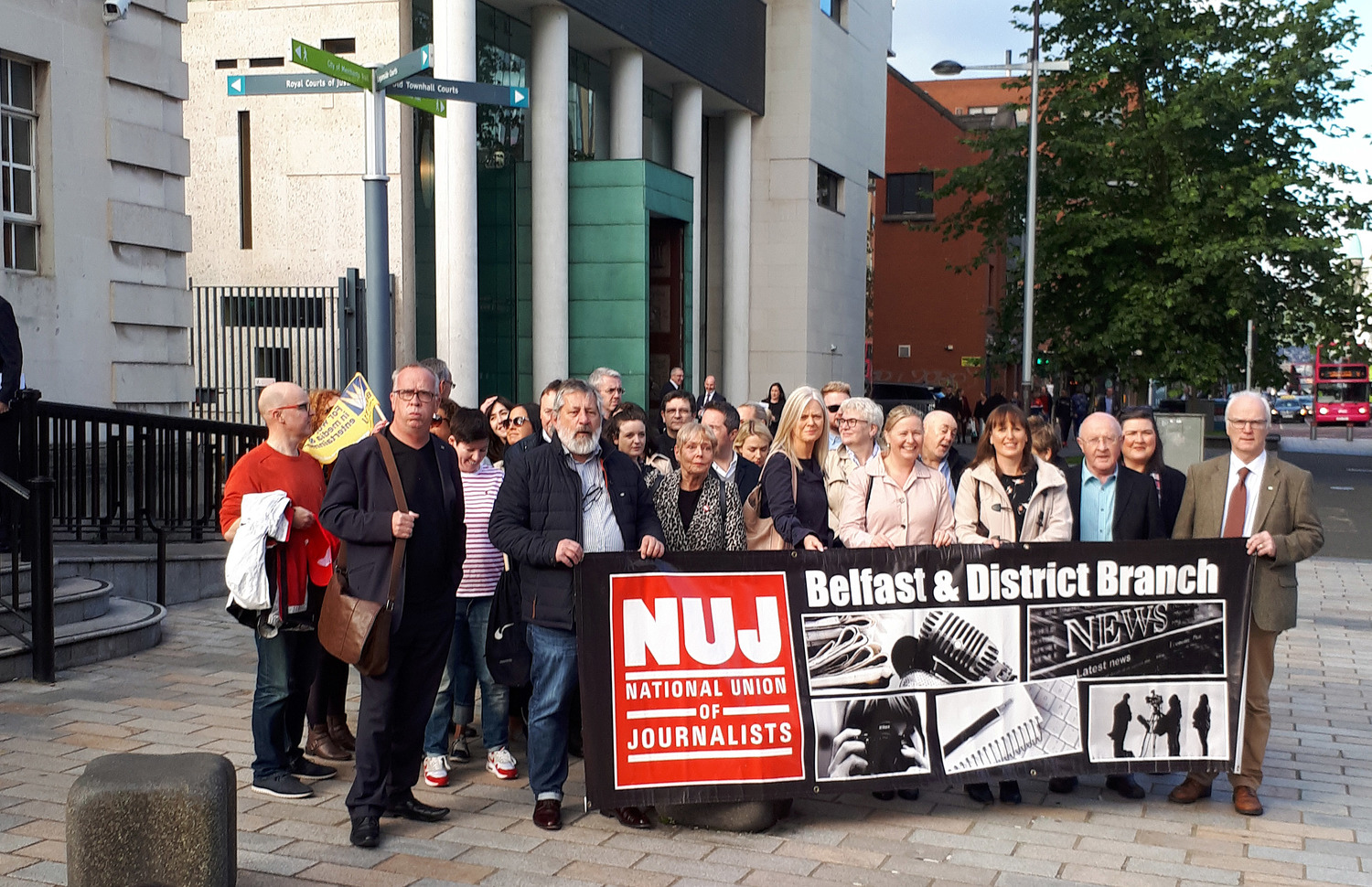
New research finds widespread suspicion among Northern Ireland journalists that they have been subject to police surveillance, writes Cian Ó Concubhair
==
Police surveillance of journalists to identify confidential sources is a story that is now well told in Northern Ireland.
It began in 2018 with unlawful police searches of journalists Trevor Birney and Barry McCaffrey’s homes and workplaces, and seizure of confidential journalistic materials.
The scandal that grew from that incident has evolved, expanded and maintained, most recently with former BBC security correspondent Brian Rowen discovering he was subject to police surveillance in 2006.
This scandal and the issues surrounding it––most notably protection of confidential journalist source material, also known as ‘journalistic privilege’––were a significant inspiration for a study we have been conducting on the role of crime and security journalism in Irish democracy.
This study was funded by Research Ireland, and in collaboration with the Irish Council for Civil Liberties. We interviewed 23 journalists from across Ireland, all with significant experience reporting on crime and security. We talked to journalists about their views on policing and the courts, and their relationship with journalism. We asked journalists about police surveillance, how confident they were about protecting confidential sources, and the role of crime and security journalism in Ireland’s democracies.
Perhaps unsurprisingly, every participant in the study working in Northern Ireland suspected they may have been subject to police surveillance. All were similarly sceptical that the PSNI would respect their need to protect confidential journalist sources. Many of the journalists that we spoke to, described the Birney/McCaffrey case as a turning point for them, ending the post-Good Friday Agreement complacency they may have had about the normalisation of policing in Northern Ireland.
In terms of the relationship with the PSNI, journalists were quick to contrast their interactions with their peers in the South who they felt had an overly close relationship with An Garda Síochána.
Even specialist crime reporters felt that in Northern Ireland, journalists had greater critical distance from the policing and security services. For a number of participants in our study, this meant journalism in Northern Ireland was in a healthier position in terms of its democratic role, as compared to its peers in the South.
For their part, journalists based in the South were divided. Those who are not specialist crime reporters were critical of their specialist peers, whose relationship with An Garda Síochána was described as compromising critical and independent oversight of Irish policing. Their specialist peers refuted this well-known criticism.
Courts
In contrast to the low levels of trust in policing among journalists in Northern Ireland, there were high levels of trust in the courts system.
Journalists working in the North overwhelmingly trusted that the courts would provide them with protection against police efforts to identify confidential sources. This can be contrasted with their peers in the South, who were more inclined to view fear of scandal among police and politicians as the biggest safeguard for journalism.
We suggest this indicates greater confidence among journalists in the legal process in the North, and greater confidence in the political process in the South.
Several participants based in the North said that, based on their own newsroom observations, aspects of journalism there had been infiltrated by British intelligence services.
Participants noted that sources who spoke to these journalists on a confidential basis, likely had their identities shared with British intelligence, breaching journalistic duties to their sources and threatening journalism in Northern Ireland. However, in all cases, these participants described this infiltration as having occurred in the pre-Good Friday Agreement era. No participants described contemporary infiltration.
All participants in this study described policing in Ireland as secretive, institutionally closed, and uncomfortable with transparency.
Many journalists compared policing in Ireland unfavourably to policing in England and the United States of America, which were understood to be much more transparent.
Interestingly, journalists working in the South felt that the PSNI press office was better than its counterpart in An Garda Síochána. While some participants working in the North felt that the close informal relationships between journalists and Gardaí in the South had distinct advantages in terms of information-sharing. All participants, however, felt that the secretive nature of policing in Ireland was a major issue for democratic accountability on the island.
Overall, the study has found journalists in Ireland to be resilient in their democratic role, with all participants in Northern Ireland saying they would be willing to go to prison to protect confidential sources.
However, despite this resilience, many participants fear the ongoing threat of state surveillance, and deeper issues in journalism’s economic model, may undermine their democratic function.
Dr Cian Ó Concubhair is Assistant Professor of Criminal Justice at Maynooth University. You can read the full report here.