 By
By
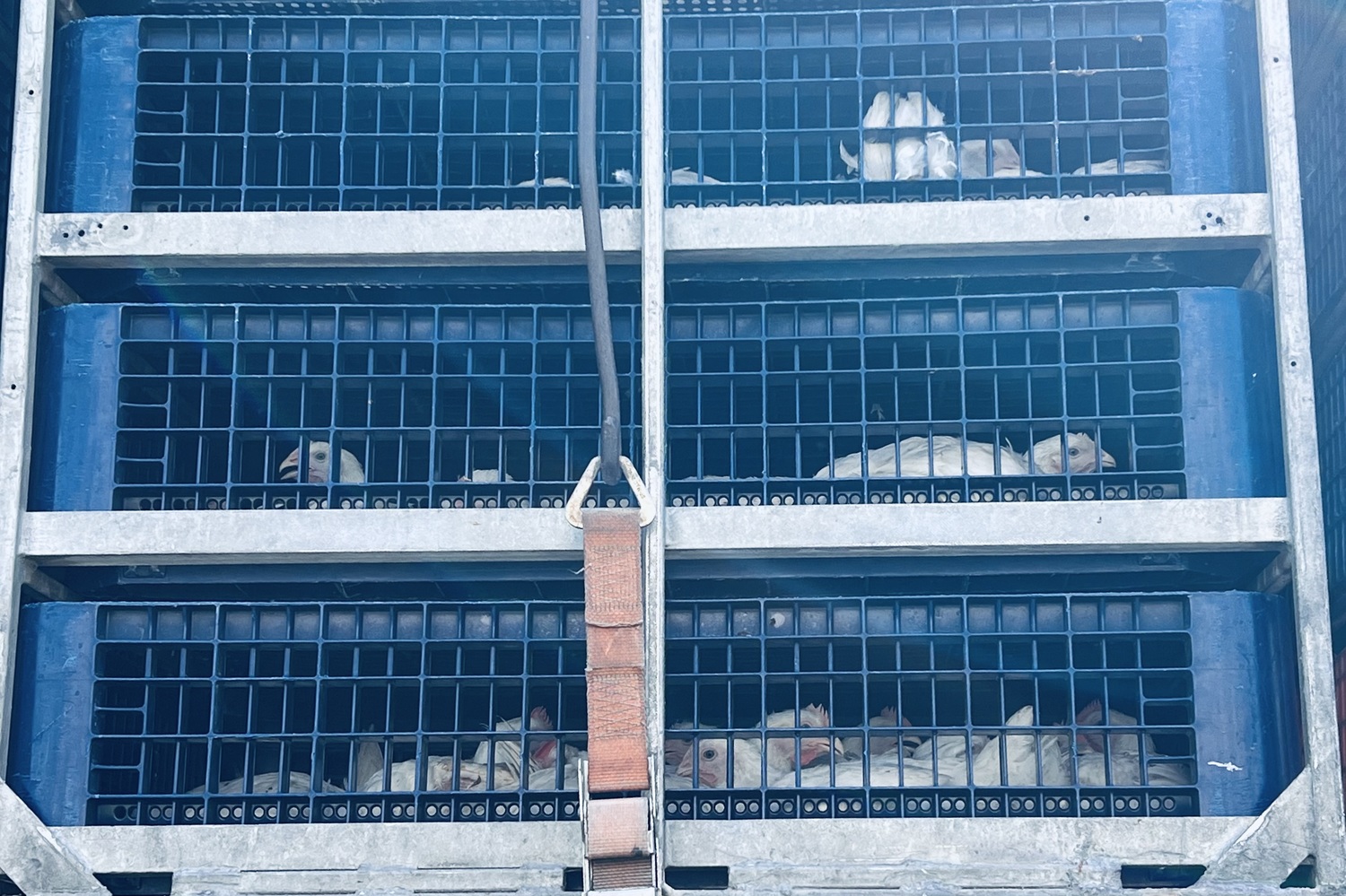
Chickens in a lorry on their way to slaughter at Pilgrim's Europe Dungannon. Photo by Shauna Corr
Moy Park farms spread 20 times as much poultry manure on Northern Irish fields as the major meat producer promised environmental authorities, a new report has found.
The company said they would spread 1% on Northern Ireland land in a July 2025 agreement with the Northern Ireland Environment Agency (NIEA).
However, around 21% of the thousands of tonnes of chicken litter created on their farms was landspread across the North last year, the company said.
The revelations are contained in a major report, “Mapped: The scale of pig and poultry farming in Northern Ireland”, which tracks the growth of agri-food industries alongside declining water quality.
Stormont launched an industry-led strategy called ‘Going for Growth’ in 2013 to accelerate the growth of farming and agri-food industries.
Poultry numbers have risen by a third (34%) since then, with a 74% increase in pig numbers. This resulted in a 51% rise in manure, which pollutes soils and waterways when too much is spread on the land for grasses and plants to absorb.
The report also found there has been a 66% rise in poultry litter since 2012.
Poultry litter, which contains bird manure, feathers, food scraps and contaminated bedding, is very high in the nutrient phosphorus on which toxic algal blooms thrive.
Moy Park, now owned by the Pilgrim’s Pride Corporation, which is headquartered in Brazil, was linked in planning documents to 82% of applications for broiler farms - chickens raised specifically for meat - between 2013 and 2025.
Northern Ireland’s intensive farms must tell the Department for Agriculture, Environment and Rural Affairs (DAERA) where their animal waste is going since it pollutes water bodies when too much is added to fields for grass and plants to absorb.
Moy Park has agreed a number of litter strategies with NIEA since 2014.
A spokesperson for Moy Park owners, Pilgrim Europe, said it has “been working towards fully-off land broiler litter management” over the past decade and hopes to send more to anaerobic digestion plants.
They added: “We are committed to the highest environmental outcomes for our farmer base and have invested considerably in science-based solutions and partnerships over the past decade.
“Our Northern Ireland poultry meat operations are highly regulated, transparent, and transitioning rapidly toward fully circular, off-land litter management, delivering environmental protection, renewable energy and circular economy benefits.”
They added that 80% of their litter in Northern Ireland was used off land, generally in anaerobic digestion plants, with plans to remove all broiler litter off land by 2028.
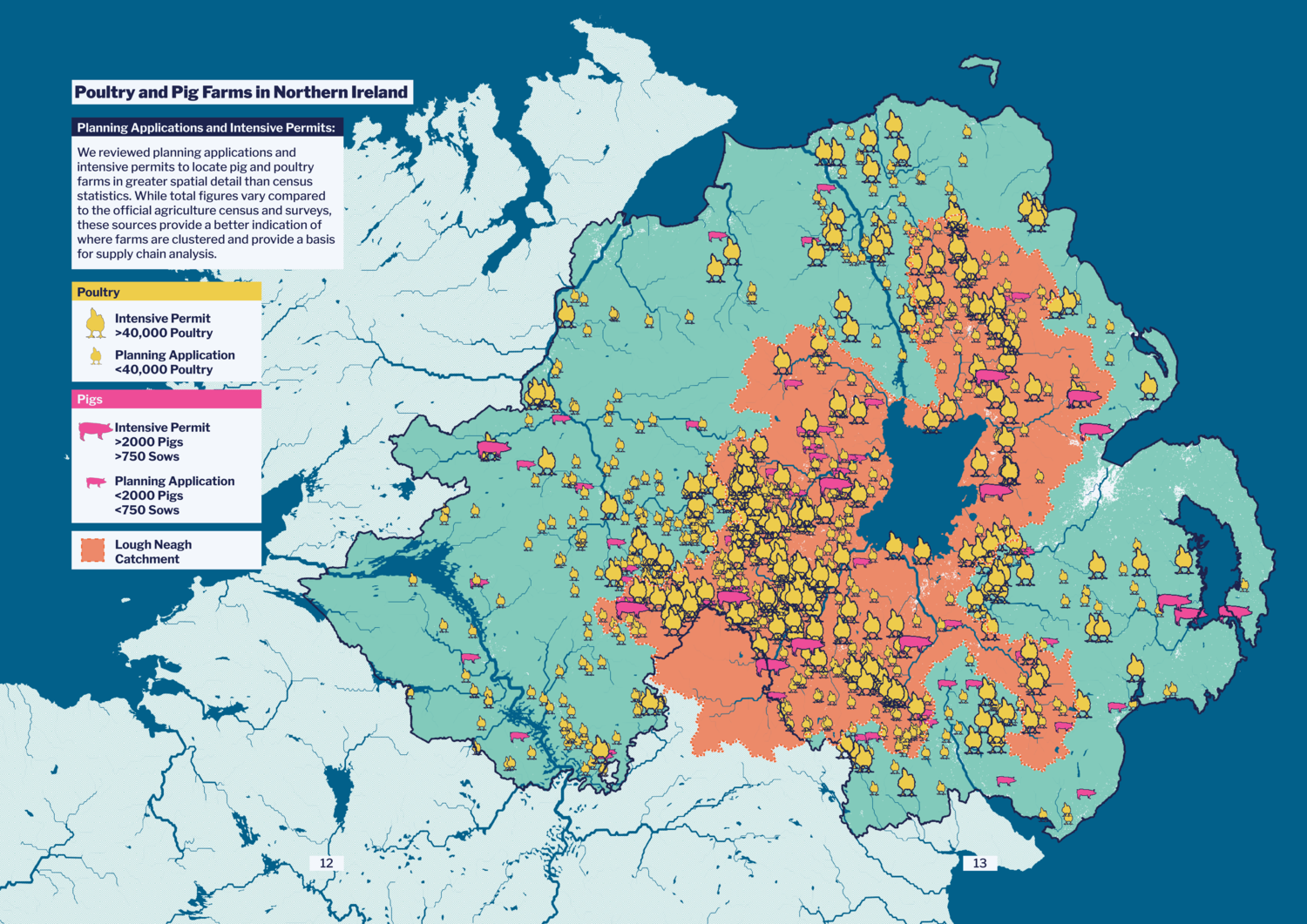
A map of poultry and pig farms in Northern Ireland. Graphic by Materiality
‘Feeding the nation'
This new research, by Friends of the Earth Northern Ireland and multimedia research agency Materiality, found Northern Ireland now has the highest density of chicken and pigs in the UK and Ireland, and more than Scotland and Wales combined.
While Britain has benefitted from estimated exports totalling 63% of poultry, eggs and pork produced here, Northern Ireland has been left with 51% more pig and poultry manure.
Statistics show nearly two thirds of pigs and poultry are raised in the area that drains into Lough Neagh – which provides half of Northern Ireland’s drinking water.
Toxic algae blooms have consumed the lough since 2023 –- killing wildlife, costing jobs and leaving it unsafe for recreation.
“Northern Ireland has become a sacrifice zone to feed the UK’s appetite for chicken and pork,” said Friends of the Earth NI director James Orr, commenting on the report.
“We have a model of factory farming where most of the profits and meat go overseas and we are left drowning in shit.”
Marks & Spencer CEO Stuart Machin last year praised Northern Ireland for “feeding the nation” but Mr Orr says it has come at huge cost to its environment.
He added: “The huge amounts of pig waste and chicken litter being spread as fertiliser on already saturated fields has disastrous consequences for lakes providing our drinking water.”
Data outlined in the report was gathered from planning applications, freedom of information requests, maps, intensive permit databases and government statistics.
Analysis shows Northern Ireland has 1,006 farms raising poultry and 403 farms keeping pigs, with 211 poultry farms and 14 pig farms licensed as intensive.
Around 138 million chickens and 1.9 million pigs are now slaughtered in Northern Ireland a year, it can be revealed for the first time.
Co Tyrone holds the most pigs and poultry at 54 birds and 1.5 pigs per person, and also produces the largest share of poultry manure and pig manure, at 43% and 33% respectively.
The report also identified a 48% increase in pig manure in Northern Ireland since the launch of Going For Growth in 2012.
Documents show all of the 1.26 million tonnes of manure from intensive pig farms feeding two major producers, Sofina, which took over Finnebrogue in County Down in 2025 and the Ballymena based company, Cranswick, is spread on Northern Ireland fields.
Sofina Foods (Karro) declined to comment without reviewing the full report, while Cranswick did not respond to our requests for comment.
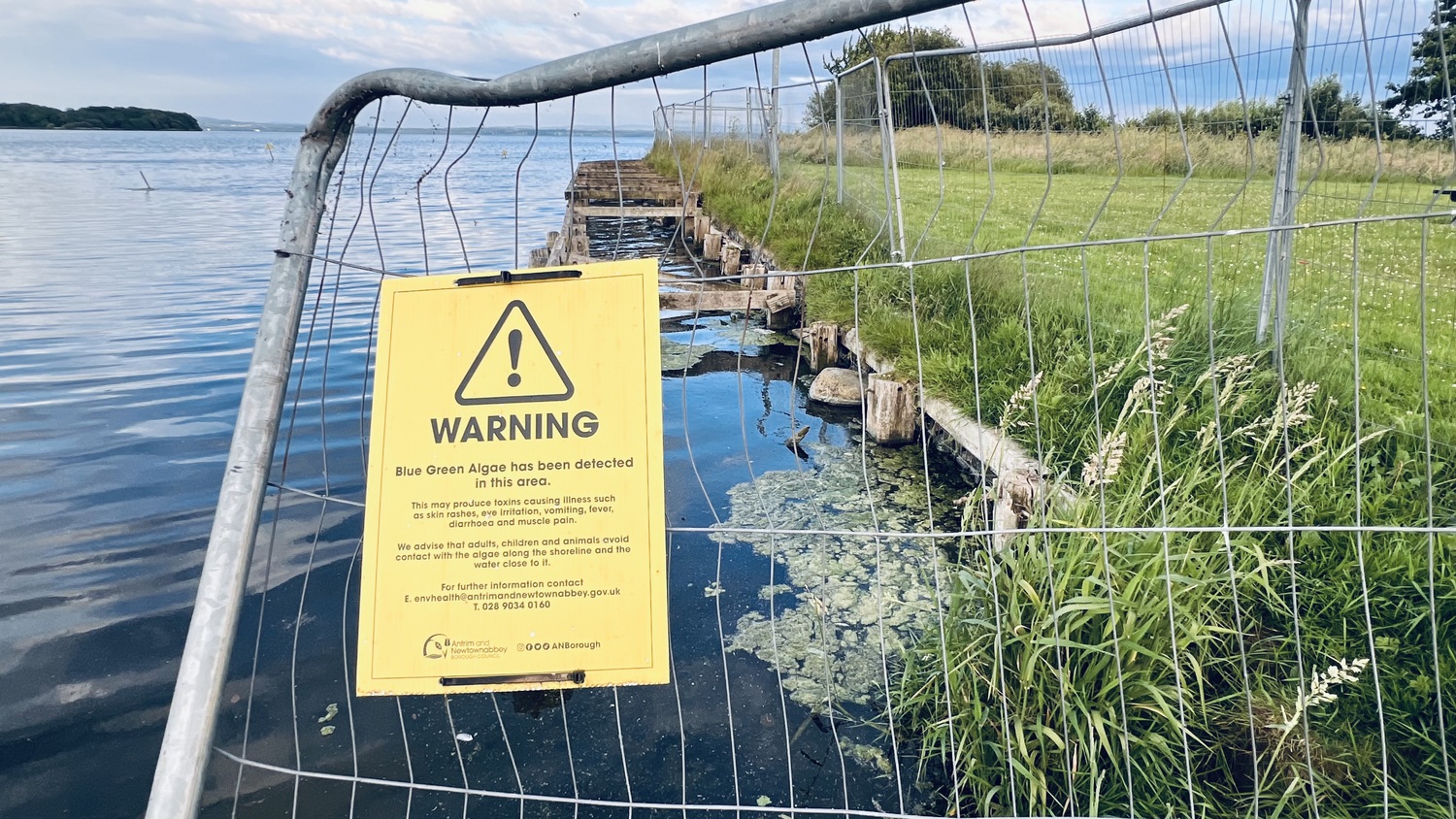
Blue-green algae warning at Cranfield Point on the Antrim shore of Lough Neagh in June 2026. Photo by Shauna Corr
Lough Neagh
Northern Ireland’s Agri-Food and Biosciences Institute (AFBI) says around 60% of Lough Neagh’s excess nutrients are from agriculture, over 20% from sewage and the rest from septic tanks, industry and households.
Gaps in water quality testing by Northern Ireland Environment Agency were prolific up to Lough Neagh’s 2023 crisis point.
A department spokesperson added: “Several new investigative sites were opened in 2024 in response to the blue-green algae issue.”
They also said they consider Lough Neagh’s one long term testing site at Toomebridge “most representative of the lake chemistry”.
Scientist and anaerobic digestion expert, Les Gornall, says phosphorus is the biggest driver of harmful algal blooms in water bodies, with soluble reactive phosphorus (SRP) levels indicating whether one will occur.
He explained: “When the SRP reaches 0.05mg/l - this food supply enables the blue-green algae to grow faster than they are consumed or washed out and they accumulate on the surface of the water.”
When this happens, he says it causes “a hazardous algal bloom”.
Analysis of water quality data provided by DAERA through information requests, shows SRP levels in Lough Neagh have been at algae-causing levels since 2012.
Lough Neagh also has the fewest long term water quality monitoring sites compared to England, Ireland, Scotland and Wales’ biggest lakes.
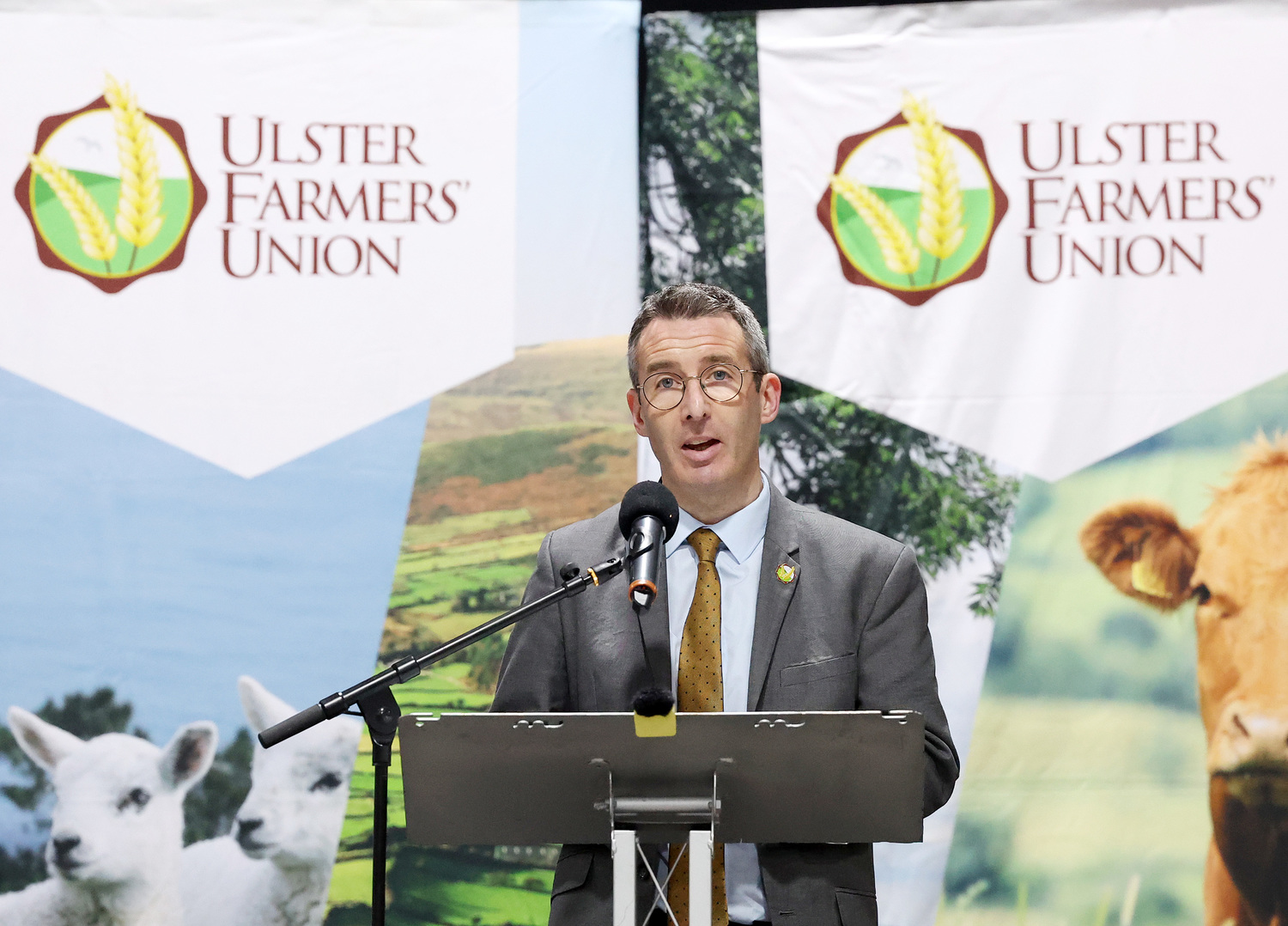
DAERA Minster Andrew Muir pictured at an agriculture event in 2024. Photo by Press Eye
Testing
DAERA launched a £37m soil nutrient health scheme in 2022, inviting farmers to find out where they are spreading too much manure on fields to reduce water quality impacts.
Averages obtained through information requests for completed zones 1, 2 and 3, show all three contain too much phosphate, with zone 4 still in progress.
That means the completed zones all contain excess nutrients that could cause water pollution.
Friends of the Earth NI has called for a reduction in animal numbers with a just transition for farmers and a moratorium on new factory farms following the study.
Director, James Orr, said: “The people of Northern Ireland and our rivers and lakes need a breathing space from the relentless pollution. We can easily reduce the number of caged animals and redirect existing and future funding towards a just transition - a transition that benefits farmers instead of the profiteering by global agri food corporations.”
We asked Infrastructure Minister, Liz Kimmins, who oversees planning policy and NI Water, if she would consider a moratorium on factory farms to help restore the lough.
She said: “We have to look at the problem as a whole. For me the priority is dealing with wastewater infrastructure and looking at the natural solutions to that.”
Going for Growth was championed by current First Minister, Michelle O’Neill, and former First Minister, Arlene Foster, in previous ministerial roles overseeing agriculture and enterprise and greenlit by NI’s Executive Committee.
When asked if they felt in any way responsible for the pollution that turned Lough Neagh green, Sinn Fein said on behalf of Ms O’Neill the party is “committed to repairing the damage” and “safeguarding our vital natural resources by supporting the Executive's Lough Neagh Action Plan”.
Baroness Foster’s agent did not respond.
Department for Agriculture, Environment and Rural Affairs (DAERA) Minister, Andrew Muir, has previously described Going for Growth was a “mistake” and warned Lough Neagh’s recovery could take decades.
There is no suggestion of any wrongdoing by the companies featured in this report.